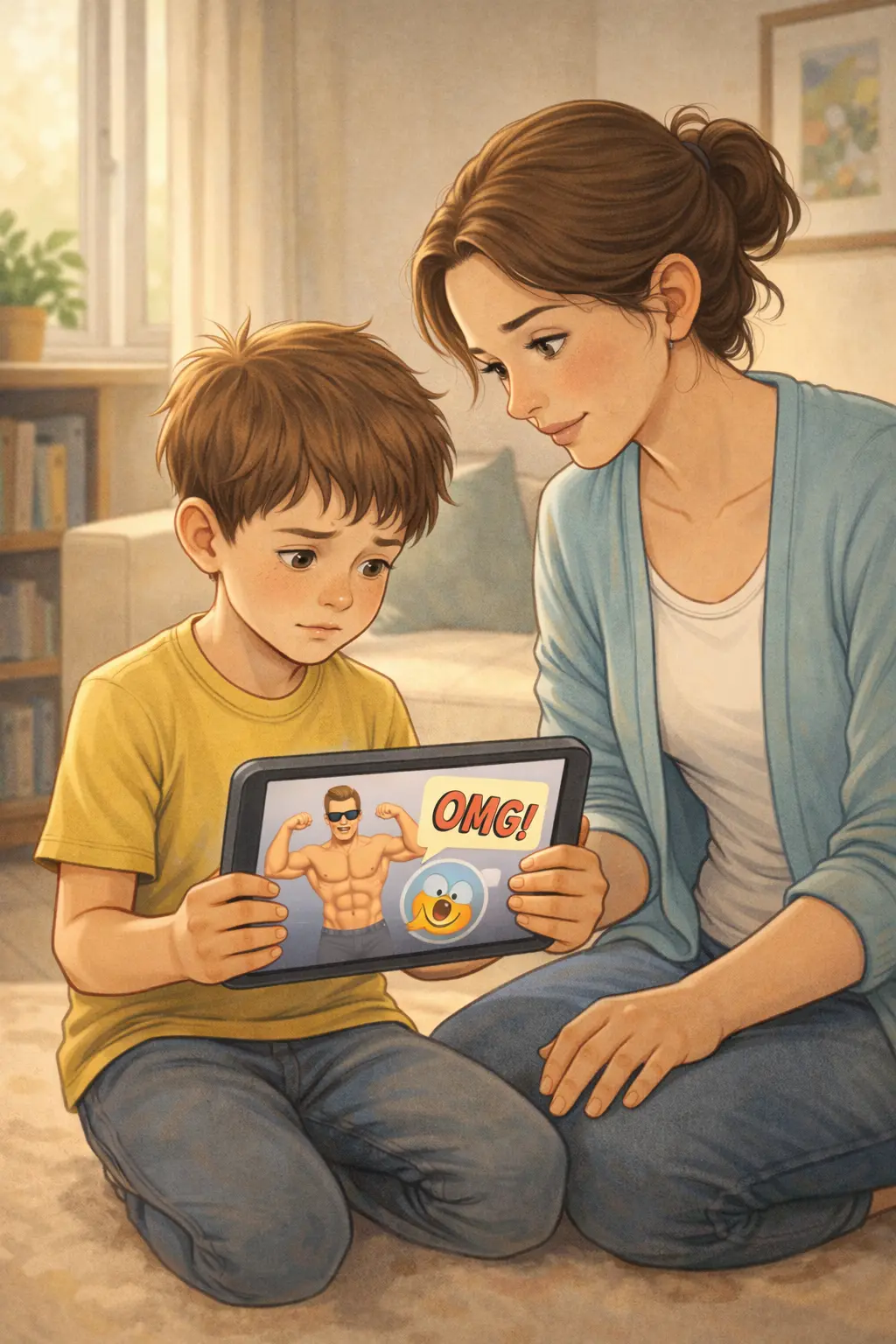
Children see a huge amount of information online, often very quickly and without much context.
They may watch videos, hear opinions, copy trends, or believe things simply because they look popular, exciting, or confidently presented.
That is why adults need to teach children that what they see online is not always true. Some content is misleading or is exaggerated. Some is designed to shock, influence, or confuse. Or some is simply unkind, unhealthy, or not appropriate for a child to copy.
When children learn this early, they are more likely to pause, question what they see, and make safer choices online.
Why Children Need Help Understanding Online Content
Young children are still learning how to tell the difference between fact, opinion, entertainment, advertising, and unhealthy influence.
Online, those things often get mixed together.
A child may assume something is true because:
-
lots of people are watching it
-
someone says it very confidently
-
it looks funny or exciting
-
it is repeated again and again
-
an older child or influencer seems popular
-
it appears in a video, game, or app they enjoy
That is why adults should not assume children will naturally understand what is trustworthy and what is not.
What Children See Online Is Not Always True or Healthy
It is important for children to learn that what they see online is not always true and not always healthy.
Some online content may:
-
exaggerate reality
-
leave out important facts
-
encourage risky behaviour
-
make cruelty look funny
-
make disrespect seem normal
-
present unhealthy ideas as confidence
-
pressure children to copy what they see
-
confuse children about what safe behaviour looks like
Children do not need scary explanations. They need simple, repeated guidance that helps them stop and think.
Teach Children to Pause Before Believing or Copying
One of the most helpful online safety skills is learning to pause.
Before believing, sharing, or copying something, children can be taught to stop and ask:
-
“Is this real?”
-
“Is this kind?”
-
“Is this safe?”
-
“Would a trusted adult agree with this?”
-
“Is this trying to help me, or just get attention?”
-
“Would I want someone to do this to me?”
These questions help slow the moment down and create space for better choices.
Explain That Online Content Is Often Made to Get Attention
Children should also understand that a lot of online content is made to grab attention, not to teach something helpful.
That means videos, clips, and posts may be designed to:
-
get laughs
-
cause shock
-
create arguments
-
make people copy trends
-
keep people watching for longer
-
make something unhealthy seem normal
When children understand this, they begin to see that popularity does not always mean truth, safety, or kindness.
Help Children Notice How Content Makes Them Feel
Sometimes online content may not look obviously unsafe, but it still leaves a child feeling unsettled.
Adults can help children ask:
-
“Did that make me feel worried?”
-
“Did that feel unkind?”
-
“Did that make someone look silly or weak?”
-
“Did that make me feel like I had to copy it?”
-
“Did that make me confused?”
These questions teach children that their feelings can be a warning sign.
If something feels uncomfortable, pushy, unkind, or confusing, that matters.
Keep the Message Simple for Ages 5–10
Young children do not need long lectures about misinformation.
They need clear, simple reminders such as:
-
not everything online is real
-
not everything online is kind
-
not everything online is safe to copy
-
some people post things just for attention
-
you can always ask a trusted adult if something feels confusing
These small messages are easier for children to remember and use in everyday life.
Use Calm Conversations Instead of Fear
If adults respond with panic, children may stop sharing what they see.
A calmer response might sound like:
-
“Let’s look at that together.”
-
“That does not look very trustworthy.”
-
“Some things online are made to get attention, not tell the truth.”
-
“I’m glad you showed me.”
-
“You can always ask if something feels confusing.”
This helps children feel safe enough to keep talking.
Build Critical Thinking Through Everyday Moments
Critical thinking for young children starts with very small habits.
Adults can help by:
-
watching or discussing content together
-
talking about what looks real and what does not
-
noticing when someone is being kind or unkind
-
asking what message a video is giving
-
gently challenging unhealthy ideas
-
praising children when they question something instead of copying it
These everyday conversations help children build stronger judgment over time.
What Parents and Schools Can Do Early
Parents and schools both play an important role in helping children understand that what they see online is not always true.
Helpful steps include:
-
keeping online conversations regular and normal
-
asking children what they are watching
-
noticing repeated themes in the content they enjoy
-
setting clear boundaries around platforms and screen use
-
helping children think about kindness, safety, and truth
-
reminding children that trusted adults can help them check things
The earlier these conversations begin, the easier it is to build healthy online habits.
Final Thoughts
Teaching children that what they see online is not always true is one of the most important early online safety lessons they can learn.
It helps them understand that popularity is not the same as truth, attention is not the same as value, and confidence is not the same as kindness or safety.
When adults guide these lessons early, children are more likely to question unhealthy messages, avoid copying harmful behaviour, and make safer choices online.
You can explore the books here
Professionals and parents can also access structured safeguarding resources here
You can explore our Toolkits here