
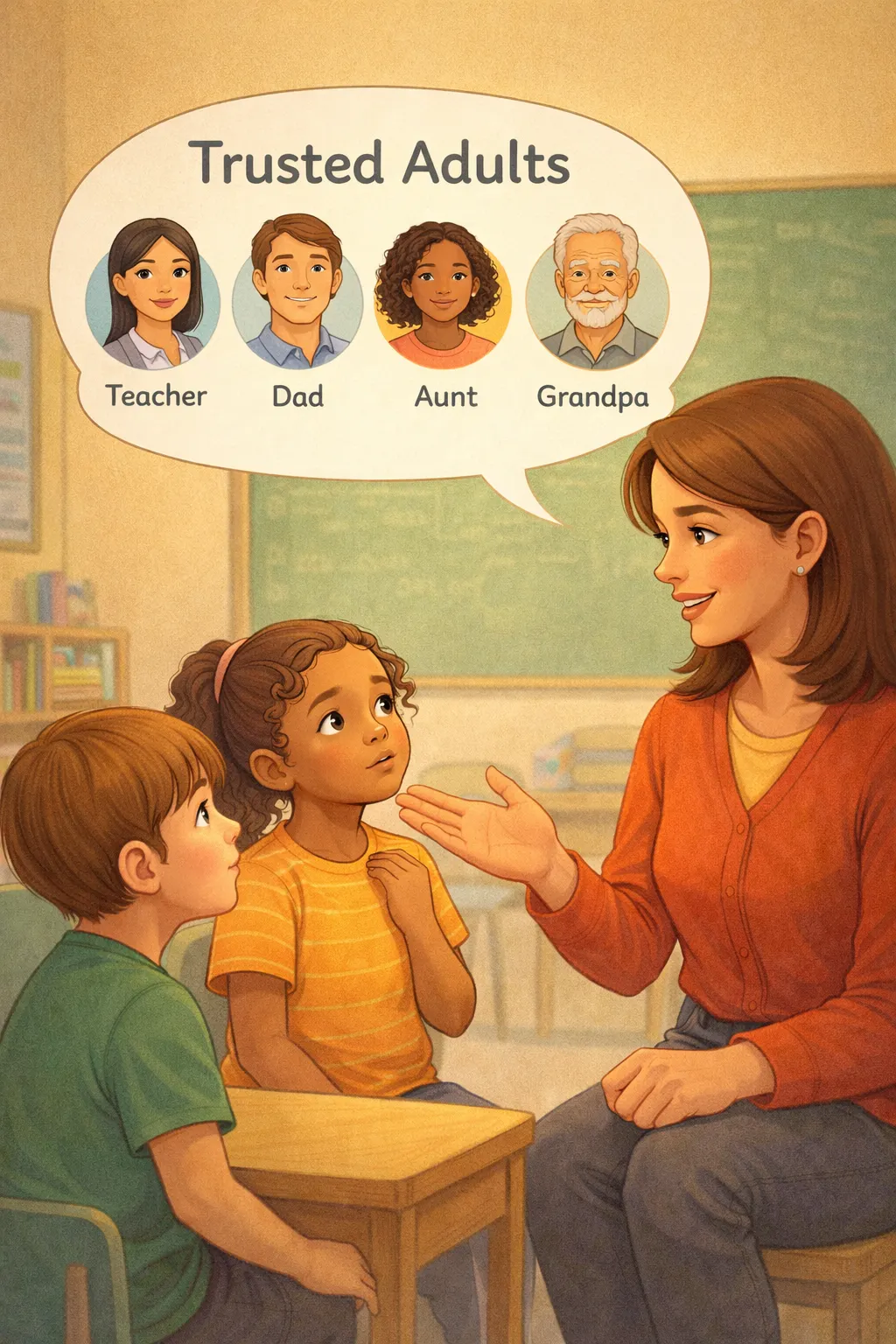
Children need to know that there are safe adults they can talk to when they feel worried, confused, or unsafe. Understanding trusted adults helps children feel supported and confident when they need help.
Children aged 5–10 are still learning how to recognise who they can rely on in difficult situations. Teaching children about trusted adults helps them understand that they are not alone and that there are people who will listen and help them stay safe.
When children know who their trusted adults are, they are more likely to speak up if something feels wrong.
What Is a Trusted Adult?
A trusted adult is someone a child can talk to when they feel worried, scared, or unsure about something.
Trusted adults are people who:
- listen carefully
- take children seriously
- help children feel safe
- try to solve problems calmly
Children should understand that trusted adults are there to help them when they need support.
Why Children Need to Know Their Trusted Adults
Children sometimes face situations that make them uncomfortable or confused. When this happens, it is important that they know who they can turn to.
Children who understand their trusted adults are more likely to:
- ask for help when something feels wrong
- speak up about problems
- feel safer and more confident
- trust that adults will listen to them
Teaching children about trusted adults is an important part of helping them stay safe.
Examples of Trusted Adults
Children should be encouraged to think about several adults they trust.
Trusted adults might include:
- parents or caregivers
- teachers
- school staff
- grandparents or relatives
- another safe adult the child knows well
Having more than one trusted adult gives children options if they ever need help.
Helping Children Identify Their Trusted Adults
Parents and teachers can help children identify trusted adults by talking about who they feel comfortable speaking to.
You might ask questions such as:
- “Who would you talk to if you felt worried?”
- “Who helps you when you need support?”
- “Who do you feel safe talking to?”
These conversations help children recognise the adults they trust.
Teaching Children That It Is Always Okay to Ask for Help
Children should understand that asking for help is always the right thing to do when something feels wrong.
Adults can remind children that:
- they will not get into trouble for asking for help
- trusted adults are there to listen and support them
- their safety and wellbeing are important
These messages help children feel confident about speaking up.
Encouraging Ongoing Conversations
Conversations about trusted adults should not happen just once. Regular discussions help children remember who they can rely on.
Parents and teachers can:
- ask children about their day
- talk about situations where someone might need help
- remind children they can always speak to a trusted adult
These conversations strengthen trust and communication.
Practical Tips for Parents and Schools
Adults can help children understand trusted adults by:
- talking openly about safety and support
- encouraging children to speak about their feelings
- reminding children that they are always listened to
- helping children identify more than one trusted adult
These steps help children feel supported and protected.
Final Thoughts
Understanding trusted adults helps children know that they have support when they need it most.
When children feel confident about speaking to trusted adults, they are more likely to ask for help and share concerns.
By encouraging open conversations and helping children identify trusted adults, parents and teachers can support children’s safety and wellbeing.
You may also find these guides helpful:
How to Teach Children About Safe and Unsafe Secrets (Ages 5–10)
What to Do When a Child Says Something Feels Wrong (Ages 5–10)
You can explore our safeguarding storybooks here
Professionals and parents can also access structured safeguarding resources here
You can explore our Toolkits here