
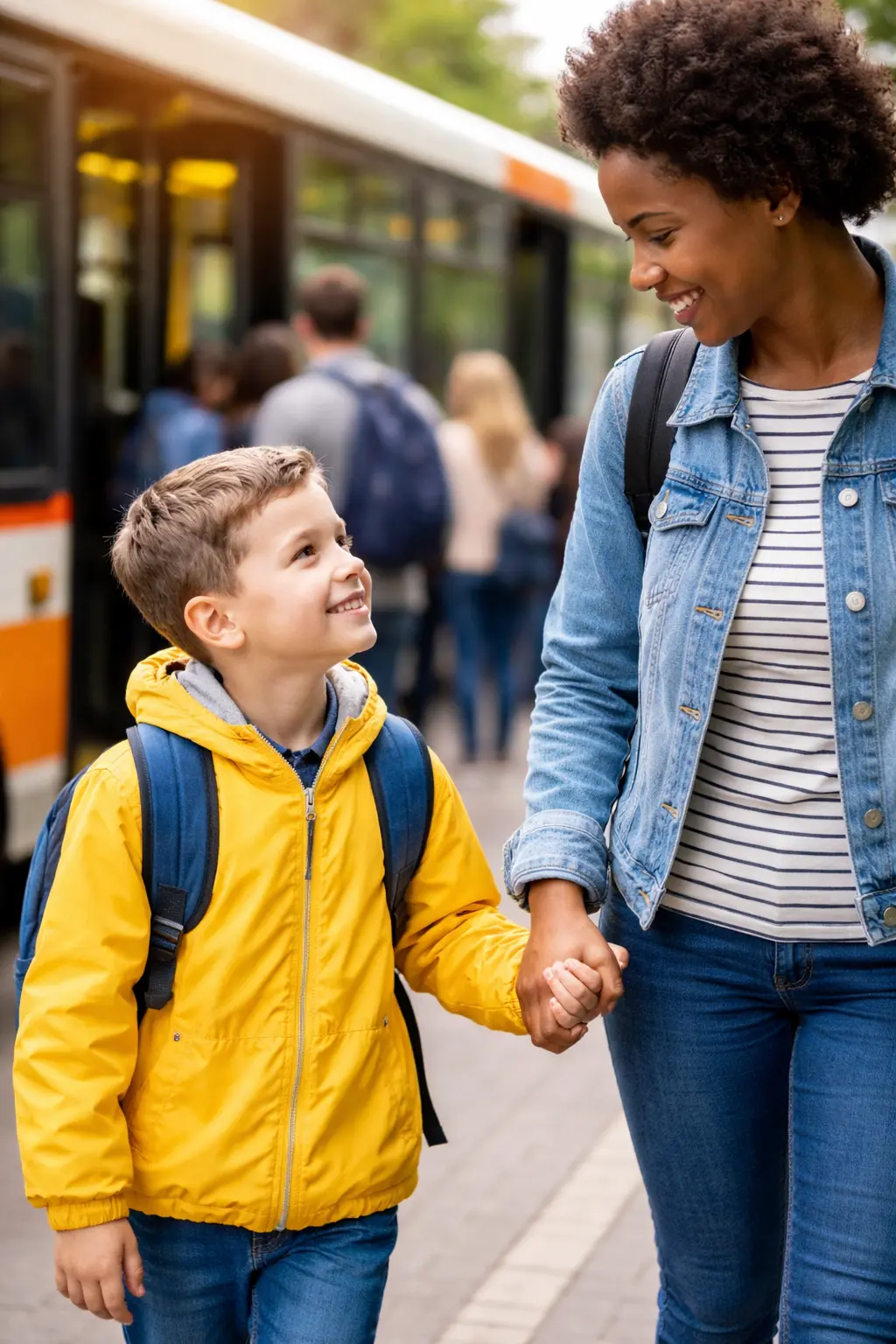
Many children begin using public transport in small ways before adults realise how much they need to know.
That might mean taking a bus with a parent, travelling to school with an older sibling, using the train for a day trip, or learning simple safety rules before they are ever allowed to travel more independently.
Teaching children to use public transport safely is not about making them fearful. It is about helping them feel calm, prepared, observant, and confident.
Why public transport safety matters for children
For children aged 5–10, buses, trains, trams, coaches, and underground systems can feel exciting, busy, noisy, and sometimes confusing.
Parents and schools often focus on getting from one place to another, but public transport also brings important safety lessons, including:
-
staying close in busy places
-
knowing what to do if separated
-
understanding simple rules around strangers
-
recognising trusted transport staff
-
keeping bags and belongings safe
-
knowing when to ask for help
-
learning how to stay calm if something unexpected happens
These are valuable real-world safety skills that can support children now and later.
Start with the basics before independence
Most children in this age group are not ready to use public transport alone.
However, they can still begin learning the foundations of safe travel while accompanied by a trusted adult.
Start by teaching children:
-
the name of the type of transport they are using
-
where they are going
-
who they are travelling with
-
what the main safety rules are
-
what to do if they feel worried, confused, or lost
Children do not need long lectures. They need short, repeated guidance in real situations.
Teach the “stay close, stay aware” rule
One of the most important transport safety lessons for younger children is simple:
Stay close. Stay where your grown-up can see you. Stay aware of what is happening around you.
This matters in:
-
bus queues
-
train platforms
-
station entrances
-
ticket barriers
-
escalators
-
crowded carriages
-
tram stops
-
ferry terminals
-
coach stations
Children can easily become distracted by signs, sounds, phones, other passengers, or the excitement of the journey.
Use short reminders such as:
-
“Stay by my side.”
-
“Hold hands here.”
-
“Eyes up.”
-
“We stop before the edge.”
-
“We wait together.”
Simple repeated language helps children remember what safe travel looks like.
Teach children the difference between safe adults and strangers
Children should not be taught that every unknown adult is dangerous.
A better message is that children should not go off with anyone, share personal details, or accept help from random adults unless they are doing so with clear safety guidance.
It helps to teach children that if they ever need help on public transport, the safest adults to look for are usually:
-
the adult they came with
-
a transport staff member in uniform
-
a police officer
-
a station worker at an information point
-
a safe adult helping alongside staff, not alone in a hidden place
You can say:
“If you need help, look for the right helper, not just the nearest person.”
That is a calmer and more useful lesson than simply saying “don’t talk to strangers.”
Explain platform, pavement, and road-edge safety clearly
Public transport safety is not only about what happens on the vehicle.
Children also need clear guidance around:
-
standing back from the edge of train or tube platforms
-
waiting away from the kerb at bus stops
-
not running ahead near roads
-
never pushing or rushing when transport arrives
-
letting people get off before getting on
-
holding hands or staying beside an adult near moving traffic
Younger children often need the reason explained.
For example:
-
“We stand back because trains come in quickly.”
-
“We wait still because buses and cars move near the stop.”
-
“We do not rush because busy people may not see small children.”
Calm explanations help rules make sense.
Prepare children for common travel situations
Children cope better when adults talk through likely situations before they happen.
Useful examples include:
-
the bus is full
-
the train is delayed
-
the adult needs to buy a ticket
-
the child cannot find a seat
-
the doors open quickly
-
the child feels crowded
-
the child needs the toilet
-
the child becomes separated for a moment
-
the child misses their stop or gets confused
Talk through these situations in advance using simple “if this happens, then this is what we do” language.
For example:
-
“If it is crowded, stay close and keep one hand on me.”
-
“If you cannot see me, stop moving and call my name.”
-
“If you feel worried, go to a staff member in uniform.”
-
“If we miss our stop, we stay calm and solve it together.”
Preparation reduces panic.
Safety rules children should know before regular travel
If a child is regularly travelling with parents, carers, or school staff, they should gradually learn a few key rules.
These may include:
-
know your full name
-
know your parent or carer’s name
-
know a safe contact number if age-appropriate
-
know the route in simple terms
-
know not to leave the bus, train, or stop without the adult in charge
-
know not to chase after dropped items
-
know to keep bags zipped and close
-
know not to show valuables openly
-
know not to wander off while waiting
Children do not need every detail at once.
Teach a few rules well, then revisit them often.
How schools can support transport safety
Primary schools can support public transport safety even when children do not travel independently.
This can be included through:
-
road and travel safety discussions
-
school trip preparation
-
speaking-up lessons
-
trusted adult work
-
role-play activities
-
transition support for older primary children
Schools can also help children practise:
-
listening carefully to group instructions
-
staying with a partner or adult
-
noticing safe meeting points
-
asking for help clearly
-
staying calm in unfamiliar places
For some children, especially those who are anxious, impulsive, distracted, or new to travel routines, extra rehearsal may be very helpful.
What to teach children if they get separated
This is one of the most important parts of transport safety.
Children should know that if they get separated, the goal is not to solve everything alone. The goal is to stop, stay as calm as possible, and get the right help.
A simple rule is:
Stop. Stay where you are. Look for the right helper.
Teach children to:
-
stop moving instead of wandering
-
call for their adult if safe to do so
-
go to a visible staff member in uniform
-
stay in a public, well-lit place
-
avoid leaving the station, stop, or platform area with another adult unless it is clearly an official helper
-
say their name and who they are looking for
This kind of rehearsal can be done calmly at home without frightening children.
Public transport safety is also about behaviour
Safe travel is not only about danger. It is also about respectful behaviour.
Children should gradually learn to:
-
wait their turn
-
speak calmly
-
keep hands and feet to themselves
-
respect personal space
-
offer quiet, considerate behaviour in shared spaces
-
follow adult instructions quickly
-
avoid blocking doors or aisles
-
stay seated or still when asked
These are important social safety skills as well as behaviour skills.
They help children move through public spaces more safely and confidently.
Children learn best by practising with trusted adults
The best way to teach transport safety is not through one big talk.
It is through small, repeated moments such as:
-
pointing out safe waiting places
-
naming staff roles
-
practising what to do if separated
-
showing children where to stand
-
rehearsing how to ask for help
-
explaining why a rule matters
-
praising calm, sensible choices
Over time, children begin to connect travel with awareness, routine, and safe decision-making.
That is a much stronger foundation than simply telling them to “be careful.”
When children may need extra support
Some children need more time, more repetition, and more direct practice.
This may be especially true for children who:
-
are very anxious
-
become distracted easily
-
have communication difficulties
-
are impulsive
-
find crowds or noise overwhelming
-
struggle with transitions or new routines
For these children, it can help to:
-
keep instructions very short
-
use the same wording each time
-
visit routes in advance
-
use simple visual reminders
-
repeat one or two key rules only
-
practise calmly during quieter times
Safety teaching works best when it matches the child’s developmental stage, not just their age.
Final thoughts
Teaching children to use public transport safely is really about building calm, everyday awareness.
Children do not need frightening messages. They need clear routines, repeated reminders, trusted-adult guidance, and simple steps they can remember when places feel busy or unfamiliar.
When parents and schools teach these skills early, children are better prepared to travel safely, speak up when they need help, and grow in confidence over time.
You can explore the books here
Professionals and parents can also access structured safeguarding resources here
You can explore our Toolkits here