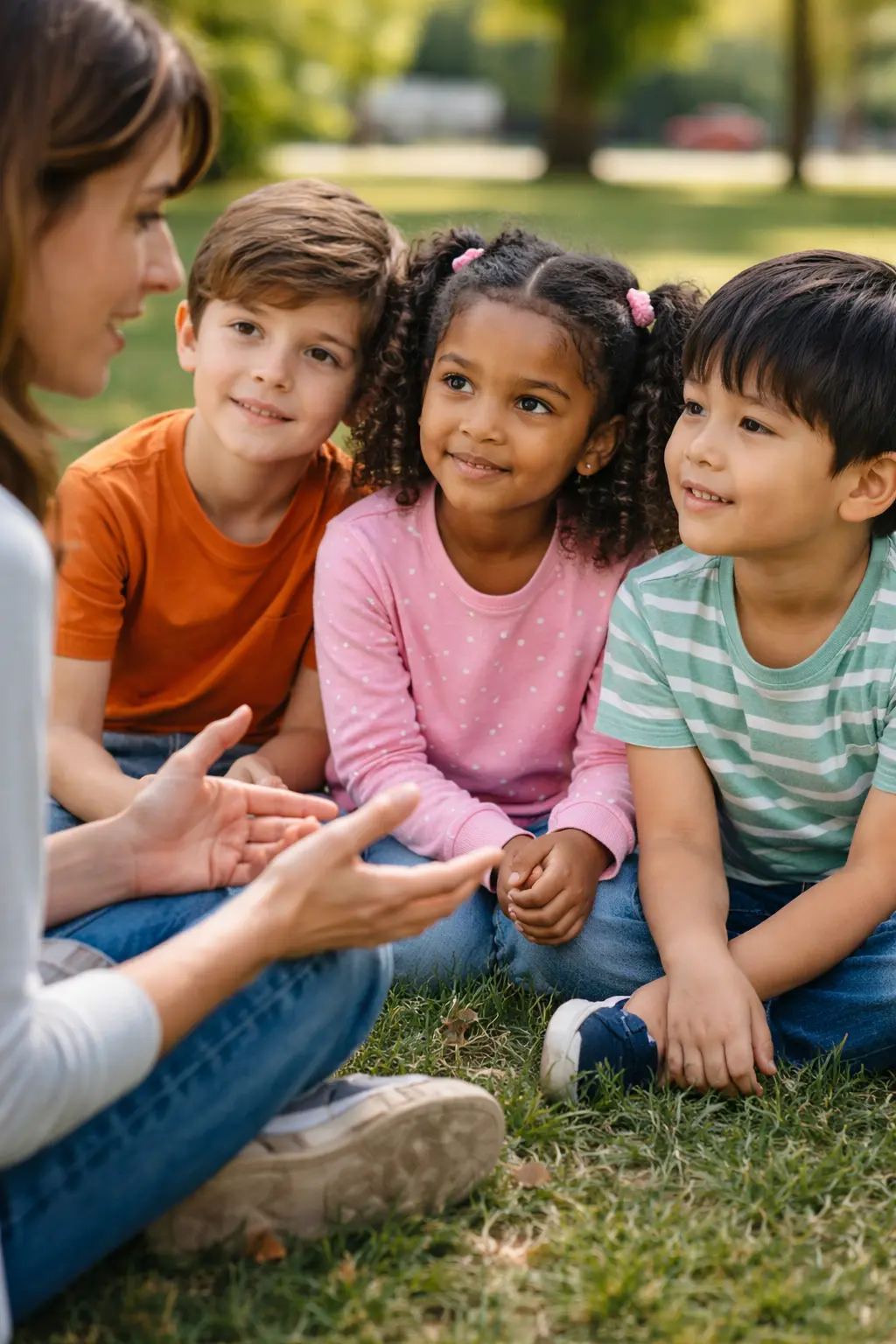
Children notice difference from an early age.
They notice skin colour, hair, language, culture, names, religion, disability, family differences, and the way people are treated. They also notice jokes, comments, exclusion, and unfairness.
That is why adults should not avoid these conversations.
When adults talk to children about difference, race and kindness in a calm and age-appropriate way, they help children build empathy, fairness, confidence, and respect for others.
These early conversations matter because attitudes are shaped long before children fully understand the bigger issues behind them.
Why These Conversations Matter Early
Some adults worry that talking about race or difference is too complicated for young children.
But children are already noticing difference, whether adults talk about it or not.
If adults stay silent, children may start building ideas from:
-
what they overhear
-
what they see online
-
what other children say
-
what gets laughed at
-
who gets included or excluded
-
how people are spoken about
That is why early guidance matters.
Children need help learning that difference is normal, people deserve respect, and nobody should be treated badly because of who they are.
Keep the Language Simple and Clear
For ages 5–10, these conversations should be simple, calm, and clear.
Children do not need long lectures.
They need everyday messages such as:
-
people may look different and still deserve the same kindness
-
families can be different and still be loving families
-
skin colour is part of who someone is and should never be a reason for unkindness
-
different cultures, names, foods, languages, and traditions are part of the world
-
being different does not make someone less important
-
unkind comments about difference are not acceptable
These messages help children build respect without fear or confusion.
Teach Kindness Without Pretending Difference Does Not Exist
Sometimes adults try to teach kindness by saying things like “we are all the same.”
The intention may be good, but children also need to understand that difference is real and should be respected, not ignored.
A healthier message is:
-
people can be different and equally valued
-
difference should not lead to teasing or exclusion
-
kindness includes respect for who someone is
-
fairness means treating people with dignity
This helps children understand that inclusion is not about pretending differences do not exist. It is about treating people well.
Notice and Challenge Unkind Comments Early
If a child makes an unkind comment about race, appearance, culture, disability, religion, or difference, adults should respond calmly and clearly.
You might say:
-
“We do not speak about people like that.”
-
“That comment is unkind.”
-
“Being different is not a bad thing.”
-
“Everyone deserves respect.”
-
“Let’s think about how that would feel.”
The goal is not to shame the child.
The goal is to correct the behaviour, guide the attitude underneath it, and keep the conversation open.
Help Children Understand Exclusion
Children do not always realise that exclusion can be hurtful.
They may leave others out because someone seems different, unfamiliar, quieter, or not part of their usual group.
Adults can help children notice this by asking:
-
“How would that feel if it happened to you?”
-
“Did everyone get a chance to join in?”
-
“Was anyone left out?”
-
“What made that feel fair or unfair?”
-
“How can we make space for others kindly?”
These questions help children move from impulse to empathy.
Use Everyday Moments to Teach Respect
These conversations do not always need to be formal.
They can happen naturally through:
-
books and stories
-
school incidents
-
playground moments
-
questions children ask
-
things seen on television or online
-
comments children repeat without understanding
These everyday moments are often the best time to teach kindness, fairness, and respect in a way children can actually absorb.
Model Respect in Daily Life
Children learn a lot from what adults do.
They notice:
-
how adults speak about other people
-
whether difference is treated with respect or discomfort
-
whether jokes are kind or unkind
-
whether people are included fairly
-
how adults respond to prejudice or exclusion
That means adults need to model the behaviour they want children to learn.
Children are much more likely to absorb respect when they see it practised consistently.
Teach That Kindness Includes Courage
Sometimes kindness means more than being polite.
It also means:
-
not joining in with teasing
-
speaking up when something is unfair
-
including someone who is left out
-
refusing to laugh at unkind jokes
-
understanding that words can hurt
These are important early lessons.
They teach children that kindness is active, not passive.
Keep the Conversation Ongoing
One conversation is not enough.
Children need repeated guidance as they grow, ask questions, and encounter new situations.
That means returning to ideas like:
-
fairness
-
belonging
-
respect
-
inclusion
-
difference
-
empathy
-
how to treat others kindly
Ongoing conversations help these values become part of everyday thinking rather than a one-off lesson.
Final Thoughts
When adults talk to children about difference, race and kindness early, they help shape safer attitudes and healthier ways of treating others.
Children need to learn that difference is part of life, and that nobody should be mocked, excluded, or treated unfairly because of who they are.
With calm guidance, everyday conversations, and clear boundaries around unkindness, children can grow in empathy, fairness, inclusion, and respect.
You can explore the books here
Professionals and parents can also access structured safeguarding resources here
You can explore our Toolkits here