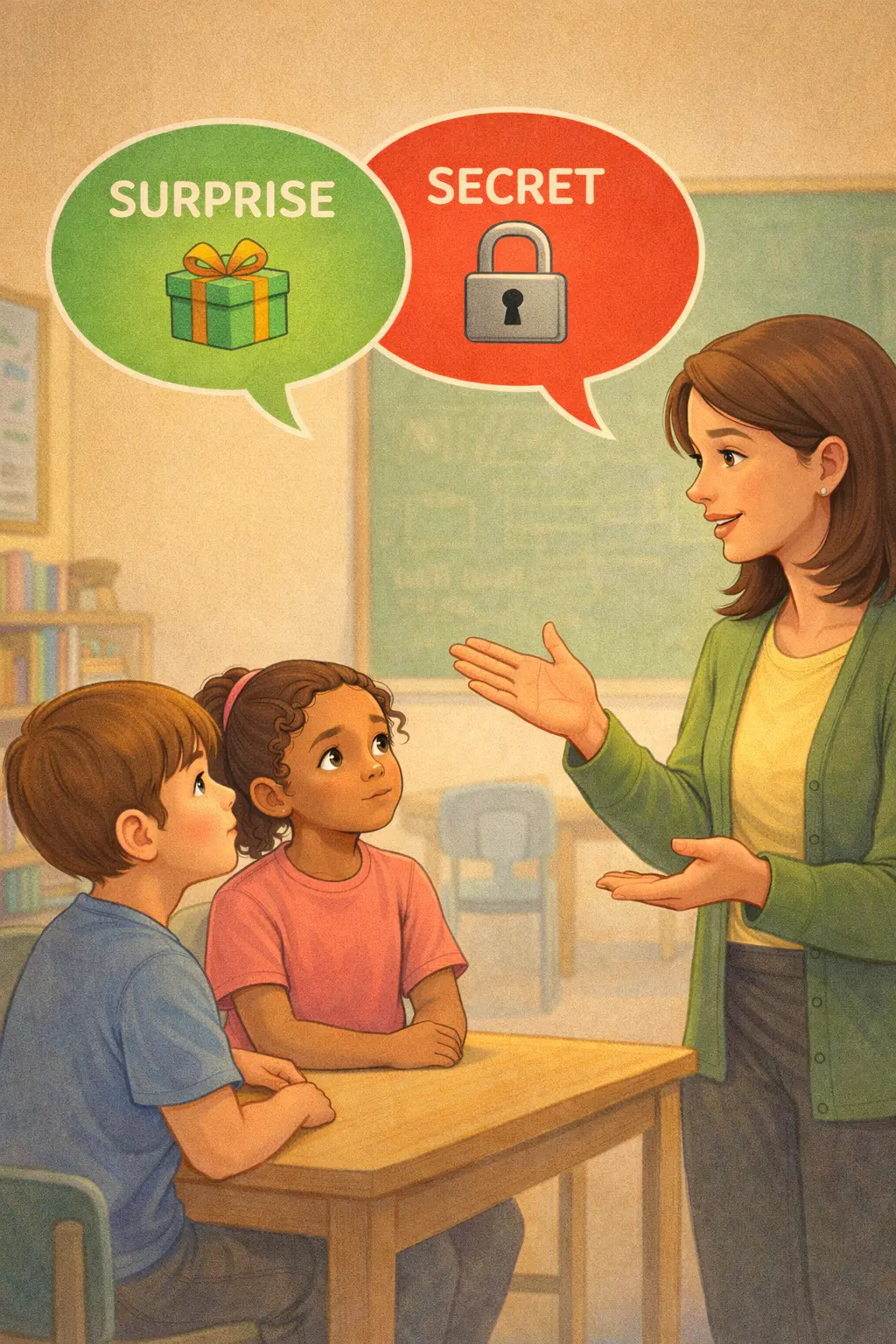
Children often hear the words surprises and secrets, but they may not always understand the difference between them. While surprises are usually fun and temporary, secrets can sometimes make children feel confused or uncomfortable.
Teaching children the difference between surprises and secrets helps them understand when something is harmless and when it may be important to speak up.
Children aged 5–10 are still learning about trust, safety, and boundaries. Clear explanations about surprises and secrets help children recognise situations that feel safe and situations that may require them to tell a trusted adult.
What Is a Surprise?
A surprise is something happy that is planned for someone else and will eventually be revealed.
Examples of surprises might include:
• planning a birthday party
• preparing a special gift
• organising a celebration
Surprises usually have three important features:
• they are meant to make someone happy
• they are temporary
• they will be shared after a short time
Children can learn that surprises are short-term and meant to bring joy.
What Is a Secret?
A secret is information that someone asks another person to keep hidden from others.
Some secrets may seem harmless, but others may make a child feel uncomfortable, worried, or confused.
Children should understand that secrets that make them feel bad should not be kept.
If a secret makes a child feel uneasy or scared, they should tell a trusted adult.
Why It Is Important to Teach the Difference
Children sometimes struggle to recognise when something is safe and when it might be unsafe.
By understanding the difference between surprises and secrets, children can:
• recognise situations that feel uncomfortable
• feel more confident about speaking up
• understand that their safety is more important than keeping a secret
These conversations help children develop awareness and confidence.
Teaching Children the “No Bad Secrets” Rule
A helpful rule children can remember is simple:
Surprises are happy and temporary. Secrets that make you feel bad should always be told to a trusted adult.
Children can be encouraged to think about how something makes them feel.
If something makes them feel:
• worried
• scared
• uncomfortable
• confused
then it is important to talk to a trusted adult.
Helping Children Identify Trusted Adults
Children should know who they can talk to if they feel unsure about a secret.
Trusted adults may include:
• parents or caregivers
• teachers
• school staff
• family members
• another safe adult they trust
Knowing who they can talk to helps children feel more confident about asking for help.
Encouraging Open Conversations
Children are more likely to speak up when they know adults are willing to listen.
Parents and teachers can encourage this by:
• talking regularly about safety
• asking children about their day
• reminding children they can always ask for help
• responding calmly when children share concerns
These conversations help children feel supported and safe.
Practical Tips for Parents and Schools
Adults can help children understand surprises and secrets by:
• using simple examples children understand
• explaining that surprises are temporary
• reminding children they should not keep secrets that make them feel bad
• encouraging children to trust their feelings
These simple lessons help children recognise when they should speak up.
Final Thoughts
Understanding the difference between surprises and secrets helps children develop awareness and confidence.
When children know that secrets that make them feel uncomfortable should always be shared with a trusted adult, they are better prepared to protect themselves.
By encouraging open conversations, adults can help children understand that their safety always comes first.
You may also find these guides helpful:
How to Teach Children About Safe and Unsafe Secrets (Ages 5–10)
How to Help Children Understand Trusted Adults (Ages 5–10)
You can explore our safeguarding storybooks here
Professionals and parents can also access structured safeguarding resources here
You can explore our Toolkits here