
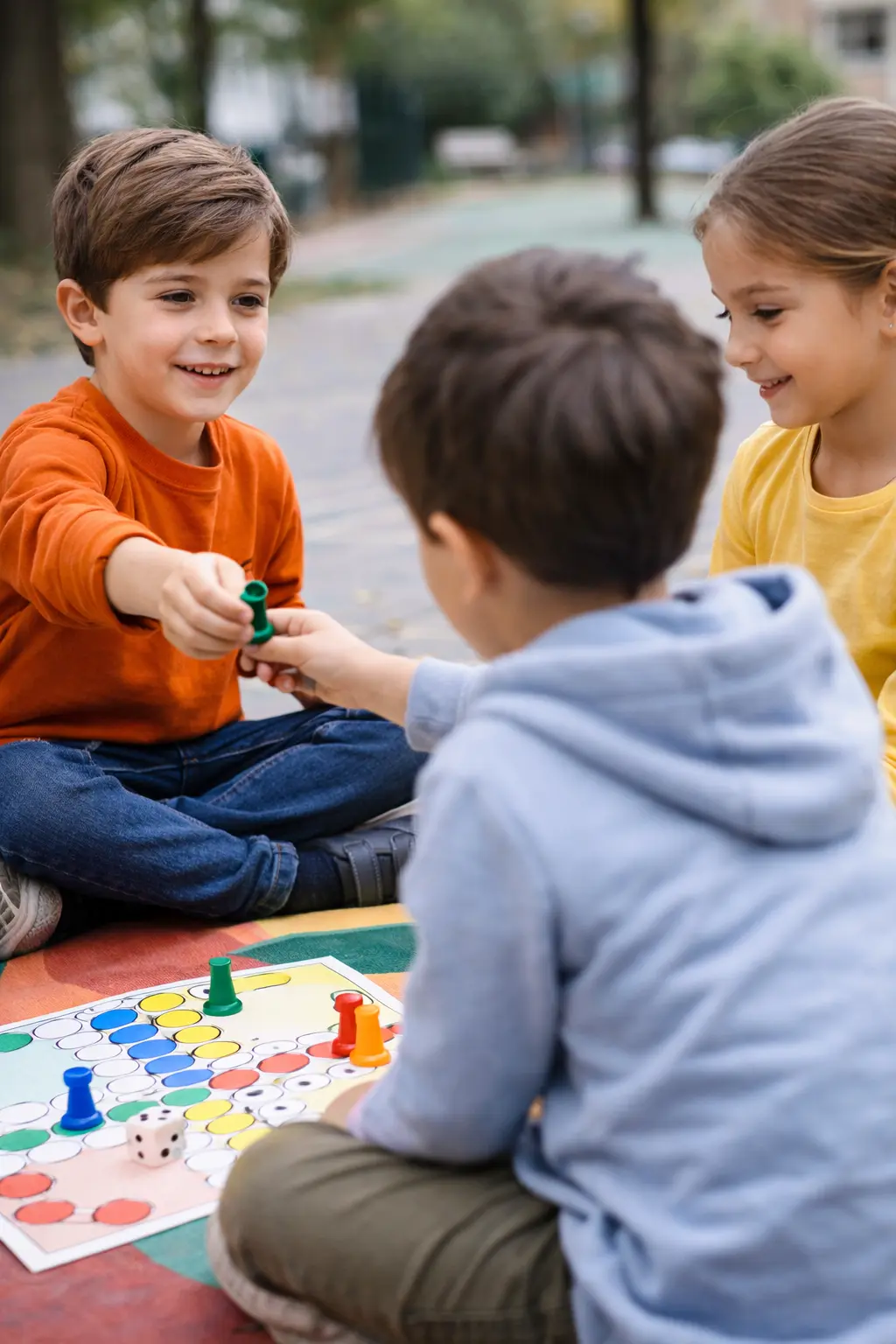
Learning to play fair, take turns, and include others is one of the most important parts of children’s social development.
For adults, problems during play can sometimes look small. A child may leave someone out, refuse to share control, grab the best role in a game, change rules to suit themselves, or say someone cannot join in.
But these moments matter.
When adults help children play fair, take turns and include others, they are teaching more than playground manners. They are helping children build empathy, fairness, confidence, and safer ways of relating to other people.
These are early building blocks for friendship, belonging, and respectful behaviour.
Why Fair Play and Inclusion Matter So Much
Children learn a great deal through play.
Play is where they practise:
-
sharing space
-
coping with frustration
-
negotiating rules
-
reading other people’s feelings
-
handling disappointment
-
including others fairly
-
solving small conflicts
That is why problems in play should not be brushed off too quickly.
If a child often dominates games, excludes others, refuses to take turns, or laughs when someone is left out, it may shape the way they begin to understand power, friendship, and fairness.
Children need guidance in these moments.
What Unfair Play Can Look Like
Unfair play is not always loud or obvious.
It may look like:
-
refusing to let another child join in
-
changing the rules to stay in control
-
always wanting to go first
-
ignoring another child’s turn
-
taking over games
-
laughing when someone is excluded
-
saying someone cannot play because they are different
-
only being kind when they get their own way
These behaviours are common in childhood, but that does not mean adults should ignore them.
They are opportunities to teach.
Help Children Understand What Fairness Looks Like
Young children need fairness explained in simple, practical ways.
You can help them understand that fairness means:
-
everyone gets a turn
-
everyone should feel included where possible
-
rules should not change just to help one person win
-
games should feel safe and kind
-
nobody should be made to feel small or unwanted
-
being frustrated does not give us the right to treat others badly
Children are more likely to use these ideas when adults repeat them calmly and often.
Teach Turn-Taking as a Skill
Taking turns does not always come naturally, especially when children are excited, competitive, or emotionally overwhelmed.
That is why turn-taking should be treated as a skill to practise, not just a rule to obey.
Adults can help by:
-
naming whose turn it is
-
using calm reminders
-
praising patient waiting
-
helping children cope with disappointment
-
keeping rules clear and steady
-
reminding children that everyone matters in the game
This helps children learn that waiting is part of playing, not a sign that they are being treated unfairly.
Include Others Early, Not Only After a Problem
Inclusion is easier to build when it is taught as a normal part of play.
Children can be encouraged to ask:
-
“Can someone else join?”
-
“Whose turn is next?”
-
“Is everyone getting a chance?”
-
“How can we make this fair?”
-
“Is anyone being left out?”
These questions help children think beyond themselves.
They begin to notice not only what they want, but how the group feels too.
Respond Calmly When a Child Excludes Someone
If a child says, “You can’t play,” or keeps shutting someone out, the first step is not anger.
The first step is calm, clear guidance.
You might say:
-
“We do not leave people out unkindly.”
-
“Let’s think about how to make space fairly.”
-
“Everyone deserves respect.”
-
“How would that feel if it happened to you?”
-
“Let’s try that again in a kinder way.”
This corrects the behaviour without humiliating the child.
Help Children Cope with Not Getting Their Own Way
A lot of unfair behaviour during play comes from frustration.
A child may know the right thing to do, but still struggle when they do not get the role, toy, turn, or outcome they wanted.
That is why children need help learning to cope with:
-
waiting
-
losing
-
compromise
-
disappointment
-
sharing control
-
not always being first
These are important social skills, and they take practice.
Notice Patterns in Play Behaviour
It helps to notice whether unfair play happens occasionally or keeps repeating.
You may want to notice:
-
whether the child always tries to control games
-
whether they often exclude the same kind of child
-
whether they struggle particularly in groups
-
whether they become unkind when frustrated
-
whether they seem unsure how to join in kindly themselves
-
whether they copy behaviour they have seen elsewhere
Patterns help adults understand whether the child needs more support with empathy, flexibility, emotional regulation, or inclusion.
Model Fairness in Everyday Life
Children notice how adults take turns, share attention, include others, and respond to frustration.
That means adults can model fairness by:
-
listening without interrupting
-
taking turns in conversation
-
using kind language
-
including quieter children
-
correcting unkindness calmly
-
showing that rules apply fairly
Children are far more likely to learn fair play when they see it lived out around them.
Final Thoughts
When adults help children play fair, take turns and include others, they are teaching much more than game rules.
They are helping children build empathy, patience, fairness, friendship skills, and respect for others.
These lessons matter because they shape how children begin to see power, kindness, belonging, and behaviour.
With calm guidance, repeated practice, and clear boundaries, children can learn that good play should feel fair, safe, and welcoming for everyone involved.
You can explore the books here
Professionals and parents can also access structured safeguarding resources here
You can explore our Toolkits here