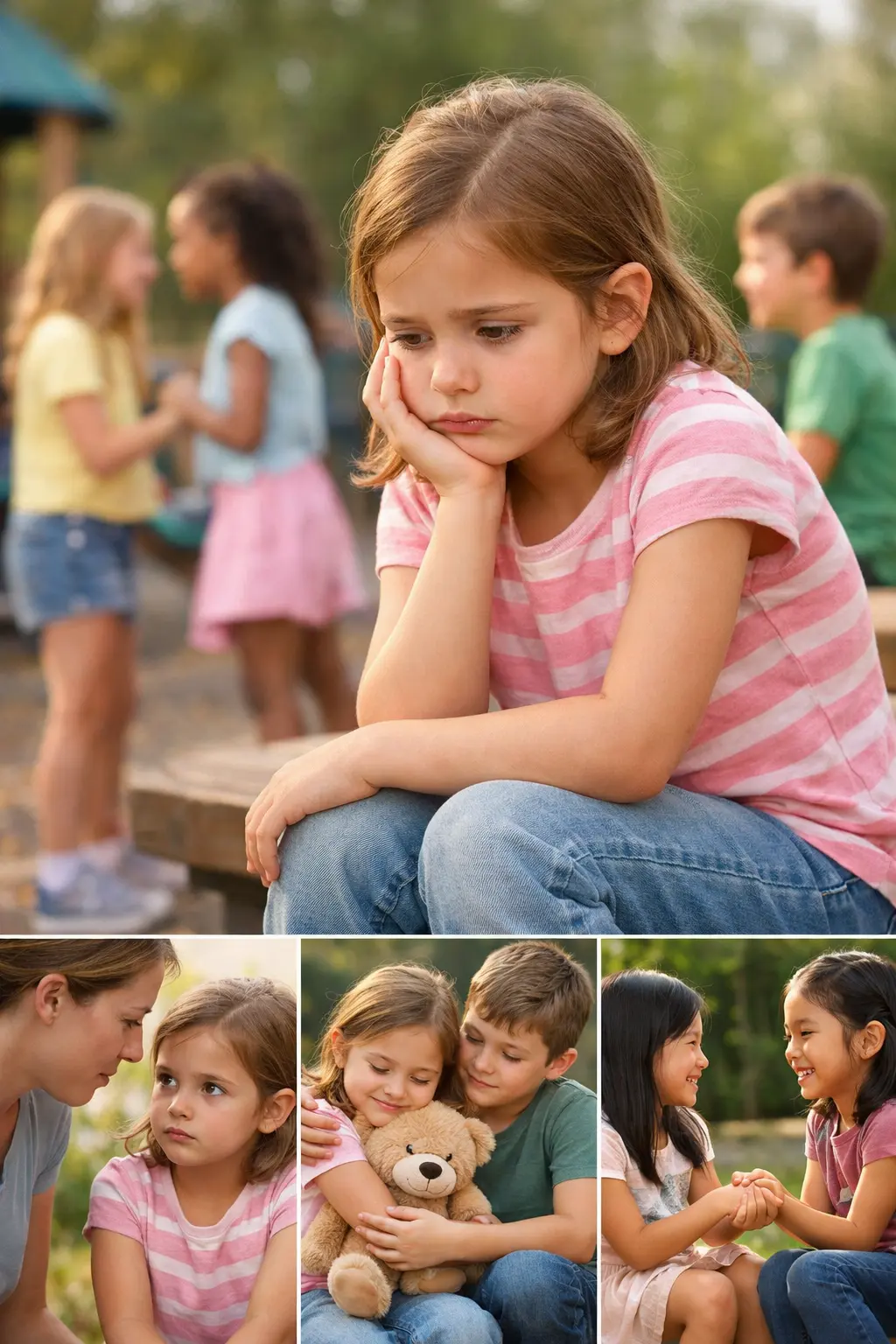
Friendships matter deeply to children.
For children aged 5–10, friendship problems can feel big, confusing, and upsetting, even when adults see them as small. Being left out of a game, ignored by a friend, or told they cannot join in can affect confidence, mood, and how safe a child feels at school or in social groups.
Why this matters
Children in this age group are still learning how friendships work.
They are learning how to share attention, solve disagreements, cope with disappointment, understand fairness, and manage strong feelings. This means friendship fallouts are common, but they still need careful adult support.
A child who feels left out may not always say, “I am struggling with friendship issues.”
They may instead say things like:
-
“Nobody wants to play with me.”
-
“They were being mean.”
-
“I don’t want to go today.”
-
“They said I can’t join in.”
-
“It’s not fair.”
Sometimes the upset is brief. Sometimes it becomes a repeated pattern that affects a child’s confidence and emotional wellbeing.
What friendship fallouts can look like
Friendship problems do not always look dramatic.
Sometimes they show up as:
-
one child being left out regularly
-
children changing friendship groups quickly
-
arguments during play
-
unkind whispering or excluding others
-
“You can’t come to my party” comments
-
children using friendship as control
-
silent treatment or ignoring
-
children feeling they must “do what others say” to stay included
For younger children, these situations can feel especially hard because they are still learning how to read social situations clearly.
Why children often struggle to explain it
Children do not always have the language to describe friendship hurt properly.
A child may feel:
-
embarrassed
-
confused
-
rejected
-
angry
-
ashamed
-
worried it will get worse if they speak up
They may also blame themselves, even when the situation is not their fault.
That is why adults need to look beyond the exact words a child uses. A child saying, “I don’t want to play anymore,” or “School is boring,” may actually be carrying friendship worries underneath.
Signs a child may be struggling socially
Some children speak openly. Others show it in quieter ways.
You may notice:
-
reluctance to go to school or clubs
-
tearfulness after school
-
talking repeatedly about one child or group
-
saying they are always alone
-
becoming clingy or withdrawn
-
sudden anger over small things
-
loss of confidence
-
worrying about parties, break times, or playtimes
-
trying too hard to please others
These signs do not always mean bullying, but they do suggest a child may need support with friendships.
What adults should do first
The first step is to stay calm.
Children need adults to listen without rushing straight into blame, panic, or overreaction. If a child feels you are angry immediately, they may hold back parts of the story.
Try to be calm, warm, and curious.
You might say:
-
“Tell me what happened.”
-
“What part felt hard?”
-
“How did that make you feel?”
-
“Has this happened before?”
-
“What happened just before that?”
-
“What would have helped in that moment?”
The goal is to understand the pattern, not just the latest upset.
Help the child name what is happening
Children often cope better when adults gently help them name the situation.
You might help them understand the difference between:
-
a disagreement
-
taking turns badly
-
leaving someone out
-
unkind behaviour
-
controlling behaviour
-
friendship mistakes
-
repeated exclusion
This matters because children need clear, simple language.
For example:
-
“It sounds like that hurt your feelings.”
-
“Being left out can feel really painful.”
-
“Friends do sometimes fall out, but repeated unkindness is still important.”
-
“You should not feel you have to be treated badly to stay included.”
This helps children feel understood and teaches them how to describe social problems more clearly.
Teach children healthy friendship messages
Children need more than comfort. They also need steady messages about what healthy friendship looks like.
Helpful messages include:
-
friendship should not feel frightening
-
good friends do not control everything
-
everyone deserves to be included with kindness
-
it is okay to walk away from unkind behaviour
-
it is okay to ask an adult for help
-
being left out is not a sign that something is wrong with you
-
you do not need to copy unkind behaviour to belong
These are important protective messages for both emotional wellbeing and wider safeguarding.
What parents can say at home
At home, short calm conversations usually work best.
You could say:
-
“You deserve to be treated kindly.”
-
“Friends can disagree, but unkind patterns matter.”
-
“You can always tell me if something keeps happening.”
-
“You do not have to stay close to someone who keeps hurting your feelings.”
-
“Let’s think about what you can do next time.”
Parents can also support children by practising simple responses such as:
-
“Please stop.”
-
“I want to play too.”
-
“That wasn’t kind.”
-
“I’m going to play somewhere else.”
-
“I’m going to tell an adult.”
This is not about making children responsible for fixing everything on their own. It is about helping them feel less powerless.
What schools can do
Schools play an important role because many friendship problems happen during shared play, group work, transitions, lunch times, and break times.
Schools can help by:
-
noticing repeated patterns of exclusion
-
supporting fair and inclusive play
-
helping children repair smaller conflicts
-
stepping in early when unkind behaviour repeats
-
teaching emotional language and social problem-solving
-
giving children safe ways to ask for help
-
communicating clearly with parents when patterns are emerging
Children benefit most when home and school respond in a similar calm, practical way.
When it may be more than a normal fallout
Not every friendship problem is serious, but adults should notice when things become repeated, targeted, or controlling.
Take a closer look if:
-
one child is regularly excluded
-
there is fear around a particular child or group
-
a child is being humiliated or threatened
-
friendship is being used as pressure
-
the child’s confidence is dropping noticeably
-
the child does not feel safe at school or in activities
-
the pattern keeps continuing despite support
At that point, it is important not to dismiss the issue as “just friendship drama.”
Repeated social harm can affect a child’s wellbeing, belonging, and sense of safety.
Helping a child rebuild confidence
When friendship hurts happen, adults often focus only on the problem itself.
But children also need help rebuilding confidence.
This can include:
-
reminding them of their strengths
-
encouraging safe friendships elsewhere
-
arranging calm play opportunities
-
praising kind choices and communication
-
helping them join activities where they can succeed
-
showing that one difficult friendship does not define them
A child who feels secure and valued is often better able to handle friendship ups and downs.
A simple rule to remember
A useful rule is this:
Friendship mistakes are common, but repeated unkindness should never be ignored.
Children need to know that feeling left out matters, that adults will listen, and that kindness, fairness, and respect are not optional extras.
Final thoughts
Friendship fallouts are a normal part of growing up, but that does not mean children should be left to handle them alone.
With calm adult support, children can learn how to name friendship problems, understand healthy behaviour, speak up when something feels wrong, and build more confident, respectful relationships.
When parents and schools respond early, kindly, and consistently, children are more likely to feel safe, included, and emotionally secure.
You can explore the books here
Professionals and parents can also access structured safeguarding resources here
You can explore our Toolkits here