
Artificial intelligence (AI) is becoming part of everyday life. Children may encounter AI through homework tools, games, chatbots, or voice assistants.
While these tools can be helpful and educational, they also introduce new challenges. Children may not always understand who they are talking to, what information is safe to share, or whether the answers they receive are accurate.
For parents, teachers, and safeguarding professionals, helping children understand how to use AI safely is becoming an important part of digital education.
In this guide, we explain how to introduce AI safely to children aged 5–10 and how to support them in developing safe digital habits.
What Is AI and Why Are Children Using It?
Artificial intelligence tools can answer questions, tell stories, help with homework, or hold conversations.
Children may encounter AI through:
- voice assistants
- homework help tools
- chatbots inside apps or websites
- AI characters inside games
These tools can be exciting and useful, but they also require guidance from adults.
Children may assume AI responses are always correct, or they may treat AI systems like real people.
Teaching children that AI is simply a tool created by people is an important first step.
Why AI Safety Matters for Children
AI systems are designed to respond to questions and conversations, but they do not truly understand the world in the same way humans do.
This can lead to issues such as:
- incorrect or misleading answers
- conversations that feel personal or emotional
- children sharing private information without realising it
Children in the 5–10 age range are still developing critical thinking skills, which means they may trust technology too easily.
Helping children understand how to use AI responsibly protects both their privacy and emotional wellbeing.
Simple Rules Children Can Follow When Using AI
Children do not need complicated explanations.
Instead, teach a few clear rules.
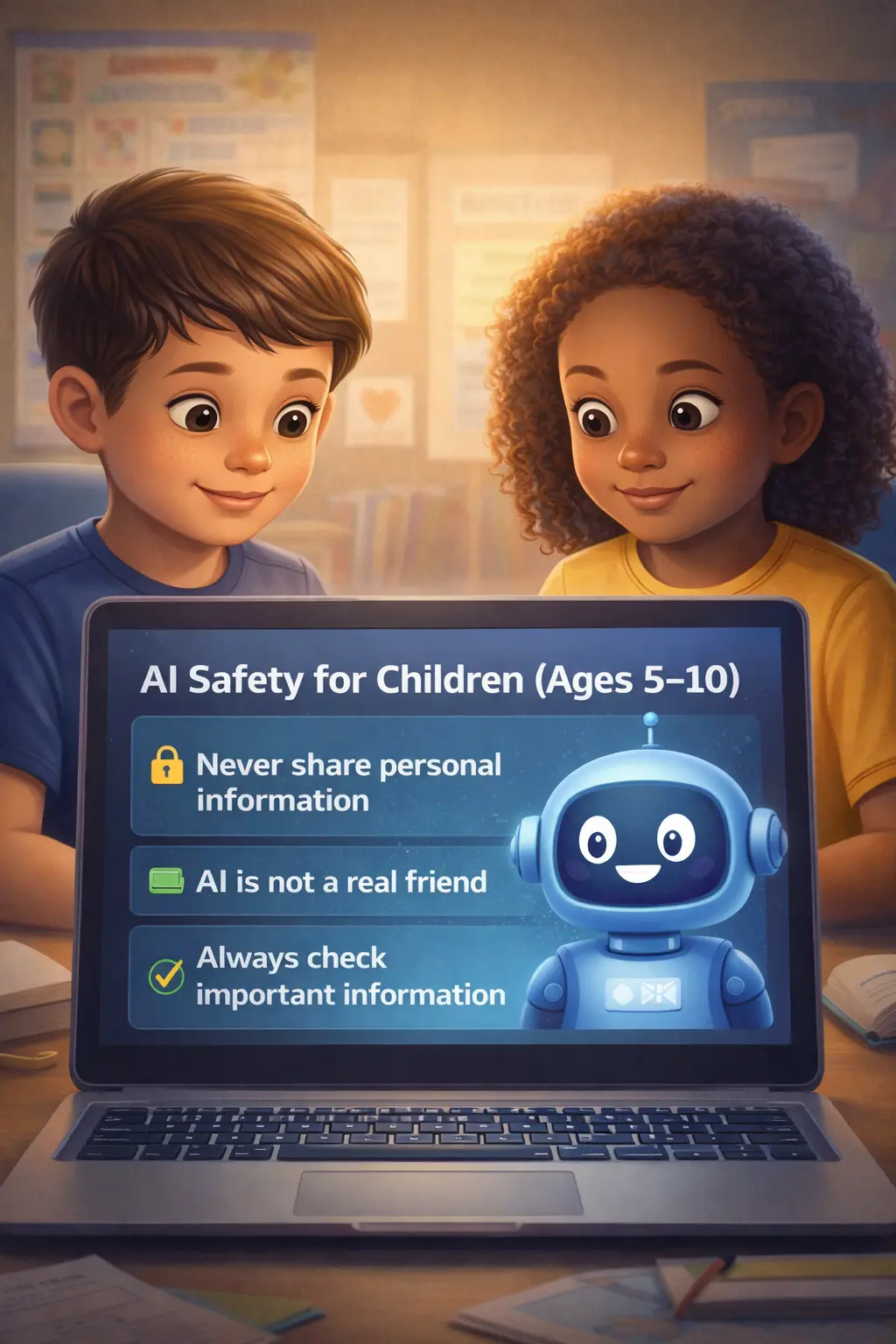
Rule 1: Never share personal information
Children should never tell an AI system their:
- full name
- home address
- school name
- passwords
- phone numbers
Rule 2: AI is not a real friend
AI may sound friendly, but it is still a computer program.
Children should always talk to a trusted adult if they feel confused, worried, or upset about something they read online.
Rule 3: Always check important information
Encourage children to ask an adult if they are unsure whether something they read from an AI system is correct.
How Parents and Teachers Can Guide AI Use
Adults play an important role in helping children develop healthy digital habits.
Some helpful steps include:
Use AI together
Explore new tools with children so they understand how they work.
Encourage questions
Let children ask how technology works and talk openly about online safety.
Set clear boundaries
Children should only use AI tools that are age-appropriate and supervised.
Focus on learning
AI should support curiosity and learning, not replace real conversations or friendships.
Teaching Critical Thinking in a Digital World
One of the most valuable skills children can learn today is critical thinking.
Instead of believing everything they read online, children should learn to ask simple questions:
- Is this true?
- Who created this information?
- Should I check with an adult?
These questions help children become thoughtful and confident digital users.
Using Storybooks to Start Safety Conversations
For younger children, storybooks are often the easiest way to introduce important topics.
Stories allow children to explore safety, emotions, and decision-making in a calm and supportive way.
Books like those in the Guy & Cesar series help children practise recognising feelings, making safe choices, and speaking to trusted adults when something feels wrong.
You can explore our safeguarding storybooks here
Professionals and parents can also access structured safeguarding resources here
You can explore our Toolkits here
Practical Tips for Parents and Schools
To support children safely:
- keep devices in shared family spaces
- encourage open conversations about online experiences
- explore new technologies together
- remind children that they can always ask for help
When children feel comfortable asking questions, they are far more likely to speak up if something online makes them uncomfortable.
Final Thoughts
Artificial intelligence will continue to shape the digital world children grow up in.
By introducing simple safety rules, encouraging curiosity, and maintaining open conversations, parents and educators can help children use new technologies safely and confidently.
Teaching digital awareness early helps children build the skills they need to navigate an increasingly complex online environment.