
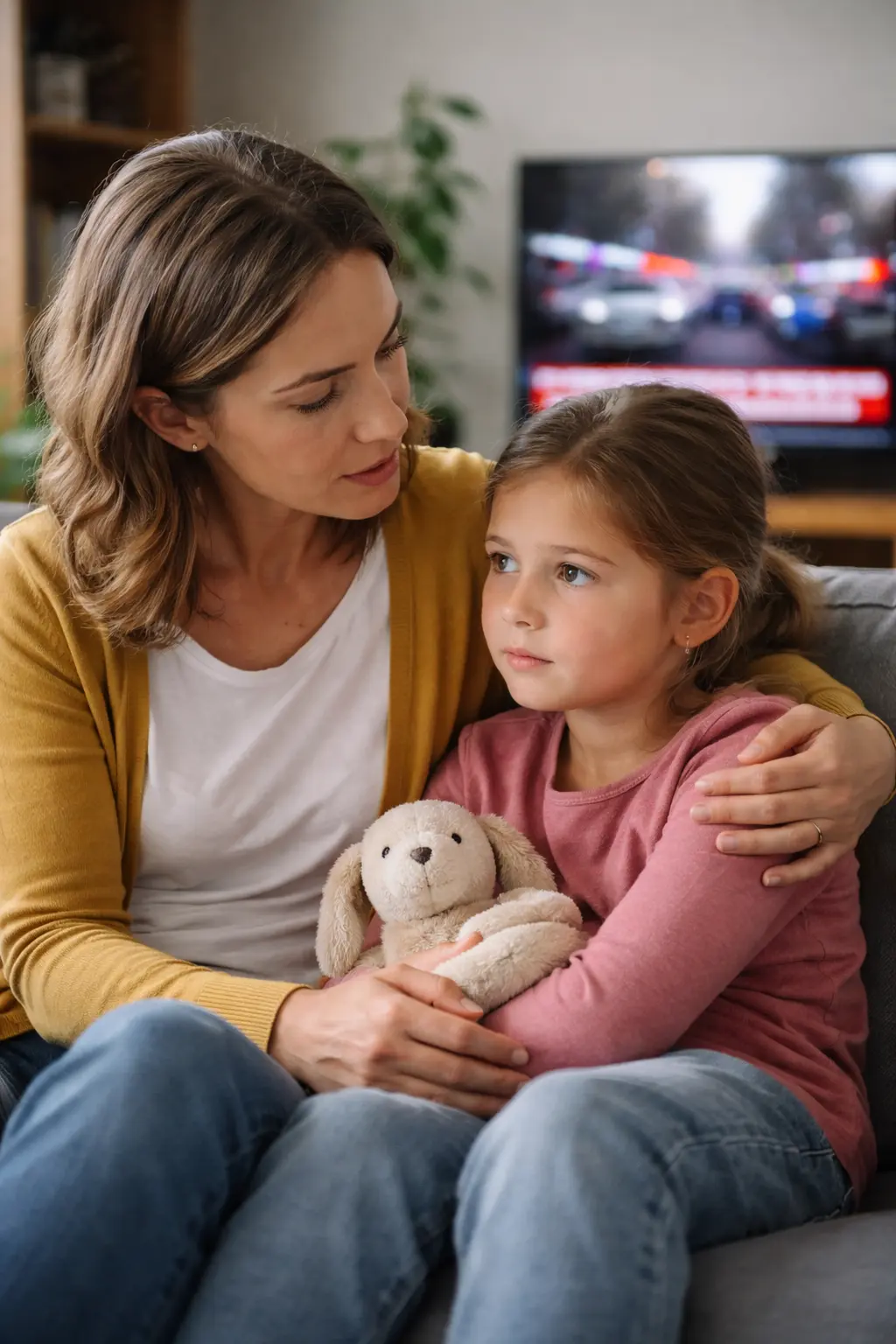
Children do not need to watch the news to be affected by it.
They may overhear adult conversations, see headlines on phones, catch clips on television, hear other children talking at school, or notice that adults seem worried or upset.
When frightening stories are in the public eye, many parents and teachers wonder how much to say, when to say it, and how to avoid making children more anxious.
Why scary news stories can affect children strongly
Children aged 5–10 often notice more than adults realise.
Even when they do not fully understand a news story, they may still pick up on:
-
fear in an adult’s voice
-
repeated mentions of danger
-
upsetting words
-
images or clips shown more than once
-
tension in the home or classroom
-
conversations between older children
This can leave children feeling confused, unsettled, or unsafe.
Some children will ask direct questions. Others may say very little but show their worry through clinginess, sleep problems, irritability, or changes in behaviour.
Start by staying calm yourself
Children take emotional cues from trusted adults.
If an adult looks panicked, overwhelmed, or angry while talking about a frightening story, a child may feel the world is unsafe in a way they cannot manage.
That does not mean adults must pretend nothing is wrong.
It means the safest starting point is a calm, steady tone.
Children need adults who can say, in effect:
“This is upsetting, but you are safe with me, and we can talk about it calmly.”
That message matters as much as the words themselves.
Do not give children more detail than they need
When adults feel anxious, they sometimes over-explain.
For children aged 5–10, too much detail can make frightening stories feel bigger, closer, and harder to process.
In most cases, children need:
-
a simple explanation
-
reassurance about what is being done to keep people safe
-
time to ask questions
-
permission to stop the conversation if they have heard enough
They do not need graphic details, repeated retelling, or adult-level analysis.
A good rule is:
Answer what the child is asking, not every detail you know.
Begin with what the child has already heard
Before explaining a news story, find out what the child already knows.
You might ask:
-
“What have you heard?”
-
“What do you think happened?”
-
“Did someone talk about this at school?”
-
“Is there something specific you are worried about?”
This helps adults do three important things:
-
correct misunderstandings
-
avoid giving unnecessary detail
-
respond to the child’s actual worry rather than guessing
Sometimes a child’s fear is not about the event itself. It may be about whether it could happen to them, whether a parent will be safe, or whether school is still safe.
Use simple, truthful, age-appropriate language
Children usually cope better with honest, simple language than vague or dramatic wording.
That means:
-
avoid frightening detail
-
avoid dramatic speculation
-
avoid making promises you cannot guarantee
-
avoid pretending something did not happen if the child already knows it did
Instead, use calm, grounded phrasing.
For example:
-
“Something very sad happened.”
-
“Some adults are working hard to help and keep people safe.”
-
“It is okay to feel worried when you hear upsetting things.”
-
“You can always ask me if something feels confusing or scary.”
Children do not need every answer straight away. They need a safe adult who can help them make sense of what they have heard.
Reassure children without dismissing their feelings
Reassurance is important, but children can tell when adults brush their feelings aside too quickly.
Phrases like “don’t worry” or “it’s nothing” may stop the conversation rather than support it.
A better approach is to combine reassurance with validation.
For example:
-
“I can see why that sounds scary.”
-
“A lot of children would feel unsettled hearing that.”
-
“You are safe right now.”
-
“If you have questions later, you can ask again.”
This helps children feel heard as well as protected.
Watch for repeated exposure to upsetting news
One of the biggest problems for children is not always the first exposure to a frightening story. It is repeated exposure.
Children may:
-
hear adults discussing it several times
-
see headlines again and again
-
watch clips repeatedly
-
hear different versions from other children
-
fill in gaps with imagination
Repeated exposure can make a story feel closer or more immediate than it really is.
It helps to reduce unnecessary background news when young children are nearby, especially if a story is distressing or still developing.
This is not about hiding the world from children. It is about managing how much frightening information they absorb before they can process it properly.
Help children separate “something happened” from “it will happen to me”
Younger children can struggle to understand probability, distance, and context.
If they hear about something bad happening somewhere else, they may worry that the same thing is about to happen to them, their family, or their school.
Adults can help by gently grounding the conversation.
For example:
-
“Something sad happened, but that does not mean the same thing is about to happen here.”
-
“The people who look after children work very hard to keep them safe.”
-
“We still keep following our usual safety rules.”
This helps children return to a sense of structure and security.
Schools can support calm, careful conversations
Teachers and schools often need to respond when children bring scary stories into the classroom or playground.
A helpful school response usually includes:
-
calm acknowledgement
-
simple facts without unnecessary detail
-
reassurance about school safety
-
space for children to ask questions
-
awareness that some children may be more affected than others
Schools do not need to turn every public story into a full class discussion.
Sometimes a quieter, more contained response is best.
Children benefit when adults stay steady, avoid sensational language, and gently redirect attention back to the routines and relationships that help them feel secure.
What to do if a child seems especially affected
Some children are more sensitive to upsetting information than others.
A child may need extra support if they:
-
keep bringing the story up repeatedly
-
seem unusually fearful
-
become clingy
-
have trouble sleeping
-
avoid school or normal routines
-
show changes in play, mood, or behaviour
-
ask the same safety questions again and again
In these situations, it can help to:
-
keep answers consistent and simple
-
reduce repeated exposure to news coverage
-
offer extra reassurance through routine
-
encourage the child to share feelings through talk, drawing, or play
-
let school know if the story is affecting the child significantly
If a child’s distress is persistent or intense, further support may be needed.
Teach children that they can always bring worries back to a trusted adult
One helpful message for children is that they do not have to carry scary information alone.
Teach them that if they hear something upsetting, they can bring it to a trusted adult rather than trying to work it out by themselves or relying on other children.
You might say:
-
“If you hear something confusing, come and ask.”
-
“If something online or in conversation worries you, tell a grown-up.”
-
“You do not have to figure out scary things on your own.”
That message builds emotional safety, trust, and healthy help-seeking habits.
Final thoughts
Talking to children about scary news stories is not about giving long explanations or pretending the world is always simple.
It is about helping children feel informed enough to make sense of what they have heard, but protected enough not to carry adult-sized fear.
When parents and schools respond with calm, honesty, and reassurance, children are more likely to feel safe, ask questions, and return to the routines that support their wellbeing.
You can explore the books here
Professionals and parents can also access structured safeguarding resources here
You can explore our Toolkits here