Children sometimes repeat words, phrases, jokes, or attitudes without fully understanding what they mean.
They may hear things at school, online, in games, on YouTube, from older children, or in everyday conversation. Sometimes they are testing language. Maybe they are copying for attention. Sometimes they are repeating something harmful without realising the impact.
Why this matters
For children aged 5–10, respectful behaviour is still being learned.
Children in this age group are developing empathy, social awareness, self-control, and an understanding of fairness. They do not always know when a word is rude, unkind, prejudiced, disrespectful, or upsetting to others.
That is why adults need to respond early, calmly, and clearly.
This is not only about manners. It is also about helping children understand:
-
how words affect other people
-
why respect matters
-
how attitudes can spread
-
how to repair mistakes
-
how to behave safely and kindly in groups
Where children may be copying harmful language from
Children often repeat language they have picked up somewhere else.
This can come from:
-
older children
-
siblings or peers
-
online videos
-
games or group chats
-
TV, music, or social media clips
-
jokes they do not understand
-
adult conversations they have overheard
A child may not fully understand the meaning behind what they are saying. But even when intent is unclear, adults still need to guide the behaviour properly.
What this can sound like
Sometimes the language is obviously rude.
Sometimes it is more subtle.
You may hear:
-
mocking names
-
repeated rude words
-
comments about appearance
-
unkind jokes
-
exclusionary language
-
copied phrases about boys, girls, race, or difference
-
language used to embarrass or control others
-
“everyone says it” as a reason to keep using it
Children may also laugh while saying something hurtful, especially if they are unsure what it means but know it gets a reaction.
Why a calm response works best
When adults hear harmful language, it can be tempting to react with shock, anger, or shame.
But a calm response is usually more helpful.
If a child feels immediately attacked or humiliated, they may become defensive, deny it, or hide the behaviour rather than learn from it.
A calm response helps adults do three things:
-
stop the behaviour clearly
-
explain why it is a problem
-
teach a better way forward
Children need correction, but they also need understanding and guidance.
What adults can say in the moment
Simple, clear language works best.
You might say:
-
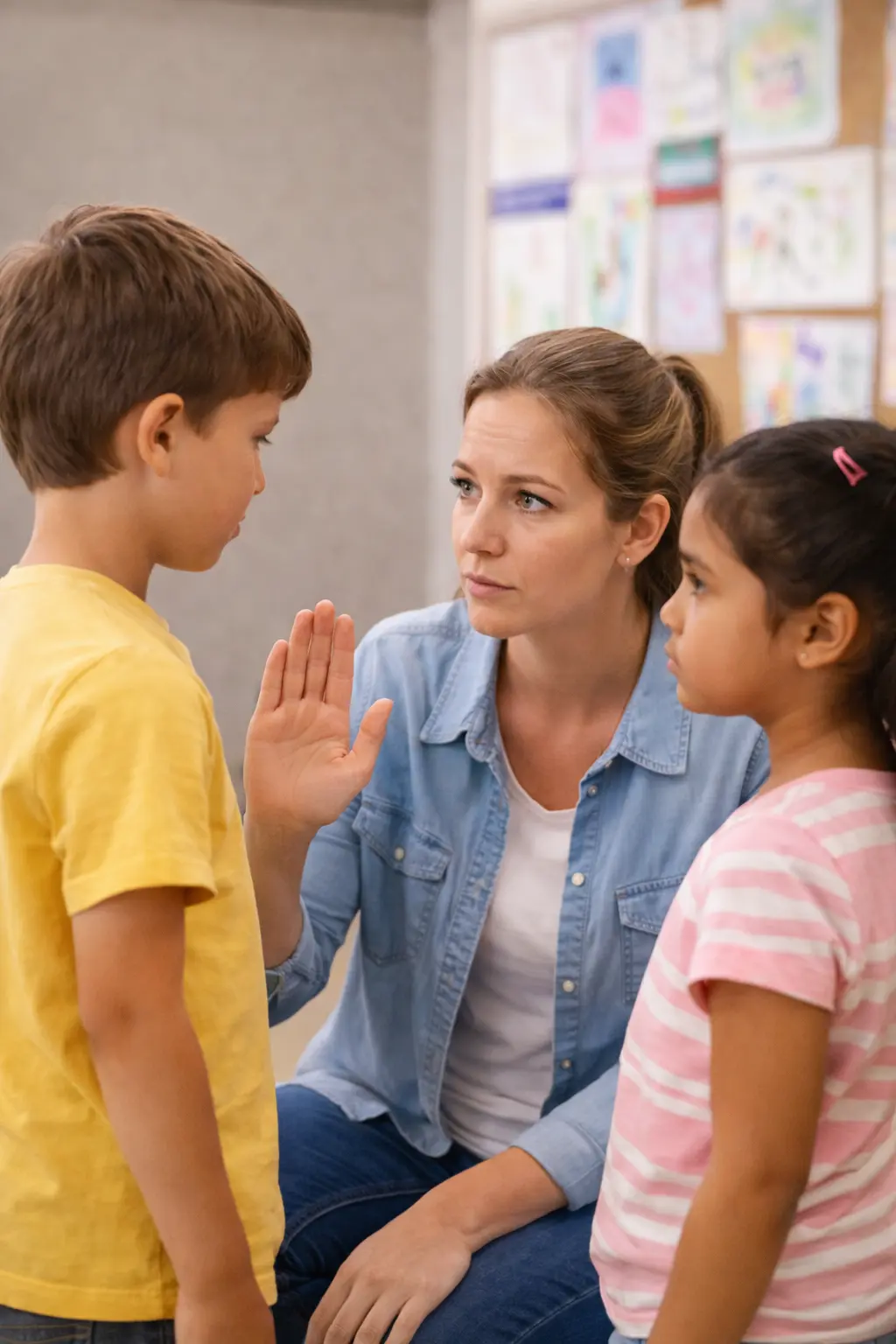
“We do not speak to people like that.”
-
“That word is not respectful.”
-
“Those words can hurt people.”
-
“Even if you heard someone else say it, it is still not okay.”
-
“Let’s choose kinder words.”
-
“I want to help you understand why that matters.”
The goal is not to give a long lecture in the moment. It is to pause the behaviour and make the boundary clear.
Help the child understand the impact
Once things are calm, help the child think about how words affect others.
You might ask:
-
“How do you think that sounded to the other person?”
-
“Would that feel kind or hurtful to hear?”
-
“Did you know what that word meant?”
-
“Where do you think you heard it?”
-
“What could you say instead?”
This helps move the child from simple rule-following to understanding.
That is important because respectful behaviour is not just about avoiding trouble. It is about learning empathy, fairness, and responsibility.
Teach the difference between copying and choosing
Children often say, “I only copied it,” as if that removes responsibility.
This is a useful teaching moment.
You can explain:
-
hearing something does not make it okay to repeat
-
copying others can still hurt people
-
children can stop, think, and choose better words
-
being kind sometimes means not joining in
-
strong character includes walking away from rude behaviour
This helps children build confidence to make safer choices, even when other children are doing something different.
Respectful behaviour includes more than words
Respect is not only about what children say.
It also includes:
-
tone of voice
-
facial expressions
-
laughing at someone
-
excluding others
-
copying accents or differences
-
making someone feel small
-
speaking over others
-
treating rules unfairly
Children need help understanding that respectful behaviour means showing care in both words and actions.
What parents can do at home
At home, parents can help by making expectations clear and consistent.
This includes:
-
correcting rude or harmful language calmly
-
explaining why certain words are hurtful
-
modelling respectful speech at home
-
praising kind communication
-
noticing patterns in what a child is watching or copying
-
talking openly about fairness, kindness, and inclusion
Parents do not need to sound perfect all the time. But children do learn a great deal from the way adults speak about other people.
What schools can do
Schools play an important role in shaping respectful behaviour.
Schools can help by:
-
reinforcing clear behaviour expectations
-
teaching children about kindness and inclusion
-
challenging rude or harmful language early
-
helping children repair hurt after poor choices
-
modelling respectful adult behaviour
-
teaching children how to disagree appropriately
-
supporting children to understand difference without mockery or fear
This kind of early guidance matters because attitudes often form long before children fully understand the effect of their words.
When the language is more serious
Sometimes a child is not just being silly or impulsive.
Sometimes the language reflects repeated exposure to harmful ideas, prejudice, or disrespect towards a particular group or person.
Adults should take a closer look when:
-
the same harmful words keep returning
-
the child seems proud of being offensive
-
the language targets race, disability, gender, religion, or difference
-
the child is using words to intimidate, shame, or exclude
-
the behaviour is spreading in a group
-
the child shows little understanding of the harm caused
In those cases, the issue needs more than a quick correction. It needs steady adult guidance, clear boundaries, and consistent follow-up.
Teach repair, not just punishment
Children need to learn that when they make a hurtful choice, they can repair it.
That may include:
-
saying sorry properly
-
understanding why the words were hurtful
-
using better language next time
-
showing kindness through actions
-
rebuilding trust if someone has been upset
This matters because children should learn that mistakes can be corrected, but harm should never be ignored.
A simple rule to remember
A useful rule is this:
Children may copy rude language quickly, but they can also learn respectful behaviour early when adults respond clearly and consistently.
That is why it helps to correct the behaviour, explain the impact, and keep returning to kindness, fairness, and respect.
Final thoughts
Children aged 5–10 are still learning how to speak, behave, and belong in social groups.
When they copy rude or harmful language, adults have an important opportunity to guide them with calm, clarity, and care. Instead of reacting with shame alone, we can teach children what respect sounds like, what kindness looks like, and why words matter.
When parents and schools work together, children are more likely to grow into thoughtful, respectful, and inclusive young people.
You can explore the books here
Professionals and parents can also access structured safeguarding resources here
You can explore our Toolkits here