
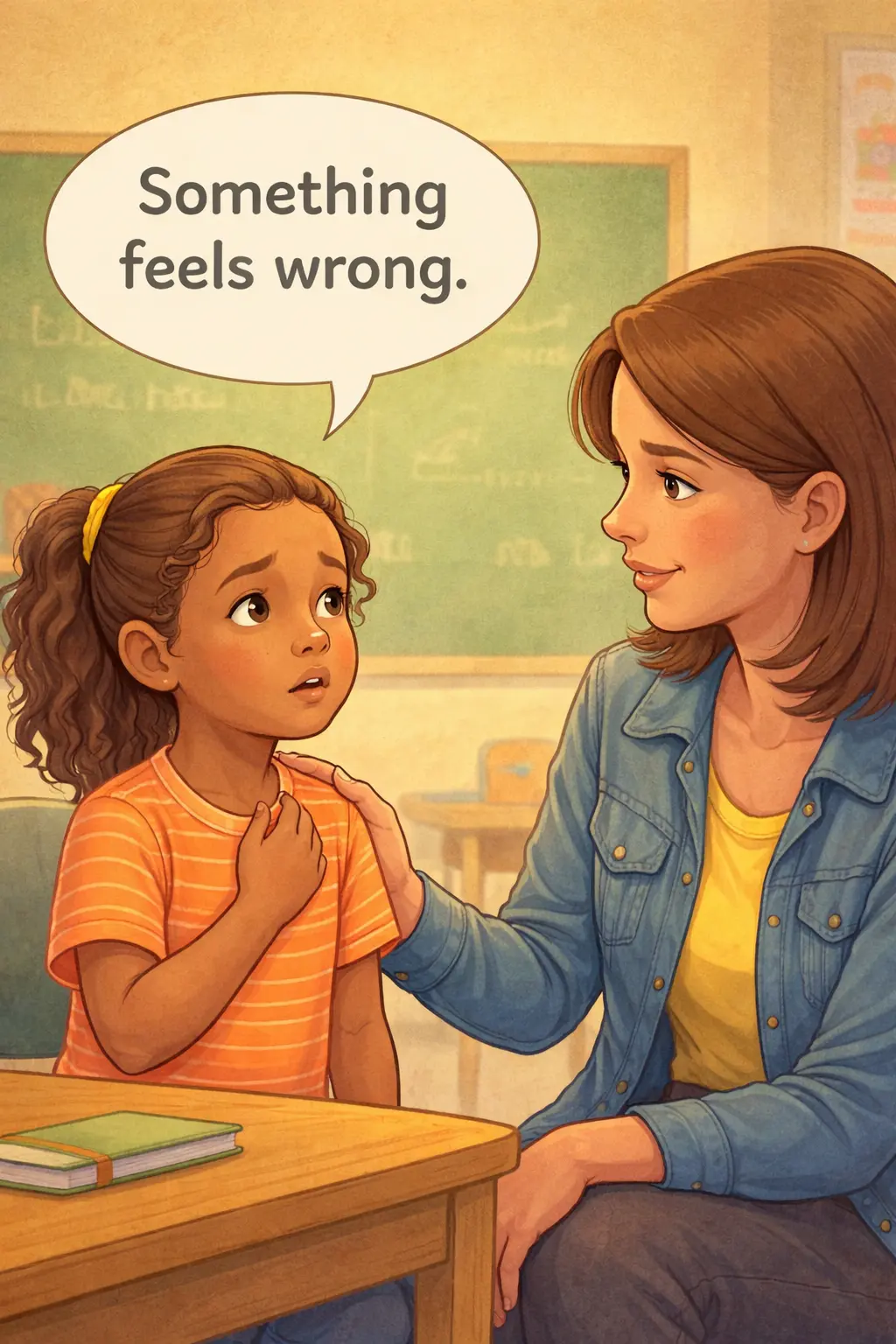
Children sometimes struggle to explain their feelings clearly. Instead of describing exactly what happened, a child may simply say that something feels wrong.
When a child says something feels wrong, it is important that adults listen carefully and take their words seriously. Children aged 5–10 are still developing the language and confidence needed to describe difficult experiences.
Knowing how to respond calmly and supportively helps children feel safe speaking up. When children feel believed and supported, they are more likely to share important information that can help adults protect them.
Why Children Sometimes Struggle to Explain What Happened
Young children often find it difficult to describe complex situations or uncomfortable experiences. They may not have the words to explain exactly what is bothering them.
Instead, they might say things such as:
- “Something feels wrong.”
- “I don’t like it.”
- “It makes me feel weird.”
- “I feel uncomfortable.”
These phrases can be a child’s way of trying to communicate that something is not right.
Adults should understand that these signals are important and deserve attention.
Stay Calm and Listen Carefully
When a child says something feels wrong, the first step is to stay calm and listen carefully.
Children watch how adults react. If an adult becomes angry, shocked, or dismissive, a child may stop talking.
Helpful responses include:
- giving the child your full attention
- speaking in a calm and reassuring voice
- allowing the child time to explain
- avoiding interrupting or rushing them
Listening calmly helps children feel safe enough to continue sharing.
Reassure the Child They Did the Right Thing
Children sometimes worry that they will get into trouble for speaking up. Reassurance helps remove that fear.
Adults can say things like:
- “Thank you for telling me.”
- “You did the right thing by speaking up.”
- “You are not in trouble.”
- “I’m glad you told me.”
These simple responses help children understand that sharing their feelings is important.
Ask Gentle Questions
Once a child feels safe, adults can ask gentle questions to help understand what happened.
Questions should remain calm and open-ended.
Examples include:
- “Can you tell me a little more about what happened?”
- “When did it start making you feel that way?”
- “Who was there when this happened?”
Avoid asking too many questions at once. Children may need time to think and respond.
Trust a Child’s Feelings
Children’s feelings are important signals. Even if the situation is not yet clear, a child saying that something feels wrong should always be taken seriously.
Adults should remember that children may sense discomfort or confusion before they fully understand what is happening.
Taking a child’s feelings seriously helps build trust and encourages future communication.
Help Children Identify Trusted Adults
Children should know there are several adults they can speak to when something feels wrong.
Trusted adults might include:
- parents or caregivers
- teachers
- school staff
- family members
- another safe adult they trust
Encouraging children to think about their trusted adults helps them know where to turn for support.
Creating an Environment Where Children Feel Safe to Speak
Children are more likely to share concerns when they feel safe and supported.
Adults can help create this environment by:
- having regular conversations about feelings
- encouraging children to talk about their day
- reminding children they can always ask for help
- showing that their feelings are taken seriously
These everyday conversations build confidence and trust.
Practical Tips for Parents and Schools
Parents and teachers can support children by:
- listening without judgement
- responding calmly
- thanking children for speaking up
- reminding children that their safety matters
These actions help children understand that their voice is important.
Final Thoughts
When a child says something feels wrong, it is an important moment that requires calm attention and support.
By listening carefully, reassuring children, and taking their feelings seriously, adults can help children feel safe sharing their concerns.
Encouraging open conversations helps children develop confidence and ensures they know that their wellbeing always comes first.
You may also find these guides helpful:
How to Help a Child Speak Up About Their Feelings
How to Teach Children About Personal Boundaries (Ages 5–10)
You can explore our safeguarding storybooks here
Professionals and parents can also access structured safeguarding resources here
You can explore our Toolkits here