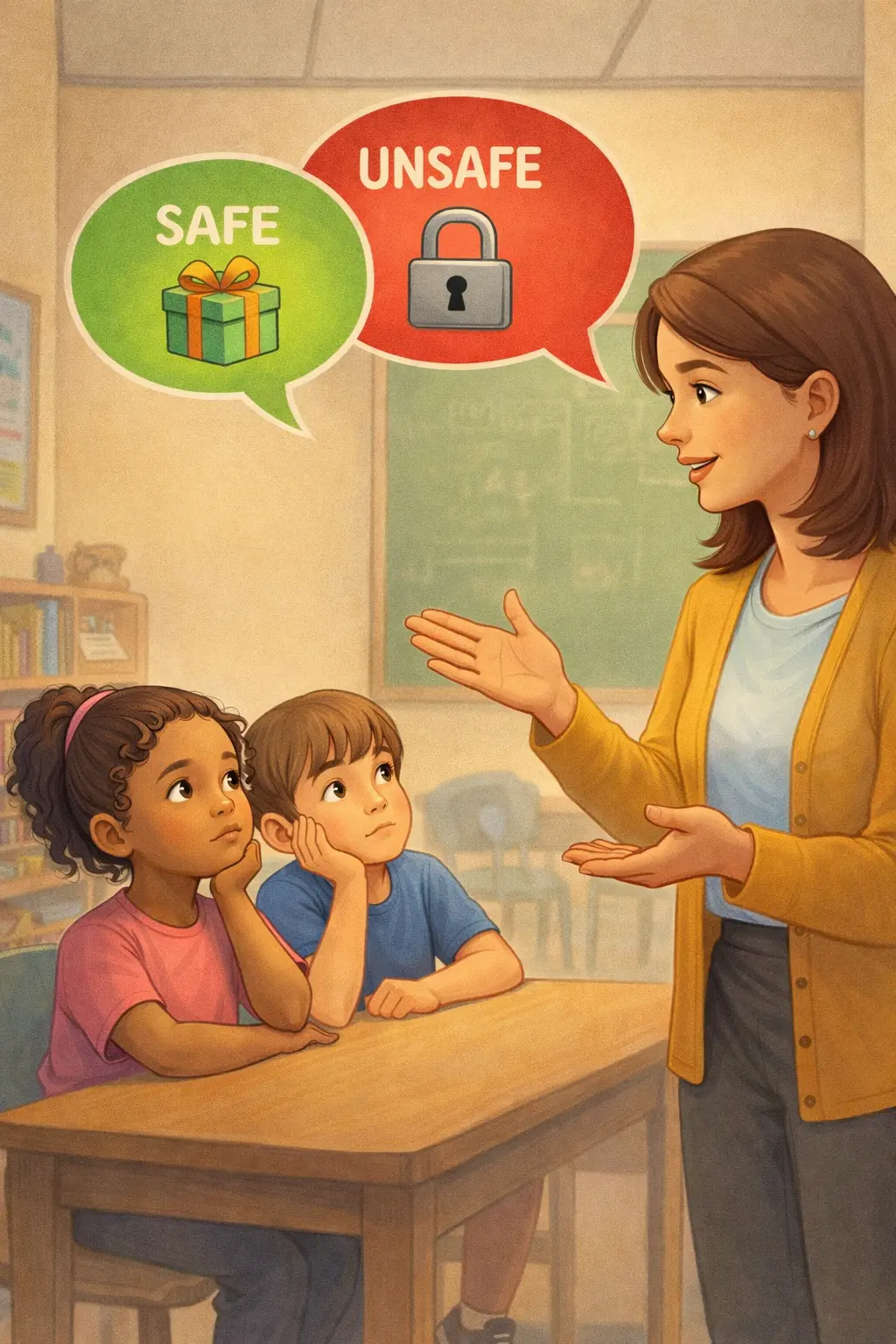
Children sometimes enjoy surprises and secrets, especially when something exciting is being planned. However, it is important for children to understand the difference between safe secrets and unsafe secrets.
Helping children understand safe and unsafe secrets is an important part of personal safety education. When children know that some secrets should never be kept, they are more likely to speak up if something feels wrong.
Children aged 5–10 are still learning about trust, boundaries, and safety. Clear conversations about secrets help children understand when something is harmless and when they should tell a trusted adult.
Why Children Need to Understand Safe and Unsafe Secrets
Some secrets are harmless and connected to happy surprises. Other secrets may be used to hide behaviour that makes a child uncomfortable or unsafe.
Children may feel confused about secrets because they want to follow instructions from adults or older children.
Children might keep unsafe secrets because:
- they think they will get into trouble
- someone told them not to tell
- they feel worried about upsetting someone
- they are unsure whether the situation is safe
Teaching children about safe and unsafe secrets helps them recognise when something does not feel right.
What Are Safe Secrets?
Safe secrets are temporary secrets that are connected to something happy or exciting.
Examples of safe secrets might include:
- planning a birthday surprise
- preparing a special celebration
- organising a surprise gift for someone
Safe secrets usually:
- make people feel happy
- are temporary
- will be shared after the surprise happens
Children can learn that safe secrets are usually short-term surprises that will eventually be revealed.
What Are Unsafe Secrets?
Unsafe secrets are secrets that someone asks a child to keep because they do not want other adults to know.
Unsafe secrets may make a child feel uncomfortable, worried, confused, or scared.
Examples may include situations where someone says:
- “Don’t tell anyone about this.”
- “This must stay our secret.”
- “You will get into trouble if you tell.”
Children should understand that secrets that make them feel uncomfortable should never be kept.
If a secret feels wrong, children should always tell a trusted adult.
Helping Children Speak Up
Children are more likely to speak up when they know they will be listened to and supported.
Adults can help by:
- staying calm when children share something important
- thanking children for telling the truth
- reassuring children they will not get into trouble
- reminding them they can always talk about anything that feels wrong
These responses help build trust and confidence.
Teaching the “No Unsafe Secrets” Rule
A simple rule children can remember is:
Secrets that make you feel bad should never be kept.
If a secret:
- makes a child feel scared
- makes a child feel uncomfortable
- feels confusing or wrong
then it is always okay to tell a trusted adult.
This helps children understand that their safety is always more important than keeping a secret.
Trusted Adults Children Can Talk To
Children should know there are several adults they can talk to if they feel worried about a secret.
Trusted adults might include:
- parents or caregivers
- teachers
- school staff
- family members
- another safe adult they trust
Knowing that there are multiple trusted adults helps children feel more confident about asking for help.
Using Stories to Help Children Understand
Stories and simple examples can make it easier for children to understand the difference between safe and unsafe secrets.
Storybooks and guided discussions can help children explore situations where characters learn when to keep a surprise and when to tell an adult.
The Guy & Cesar books and safeguarding toolkits also support these conversations by helping children recognise safe boundaries and trusted adults.
You may also find these guides helpful:
Online Safety Rules for Children Under 10
How to Teach Children About Personal Boundaries (Ages 5–10)
You can explore our safeguarding storybooks here
Professionals and parents can also access structured safeguarding resources here
You can explore our Toolkits here
Practical Tips for Parents and Schools
Adults can support children by having calm and regular conversations about safety.
Helpful steps include:
- explaining the difference between surprises and secrets
- encouraging children to trust their feelings
- reminding children they can always talk to a trusted adult
- creating an environment where children feel safe speaking up
Regular conversations help children remember that their safety and wellbeing always come first.
Final Thoughts
Understanding the difference between safe and unsafe secrets helps children recognise situations that may not feel right.
When children know that secrets that feel uncomfortable should always be shared with a trusted adult, they gain confidence and awareness.
By creating open conversations about secrets, adults can help children stay safe and supported as they grow.