
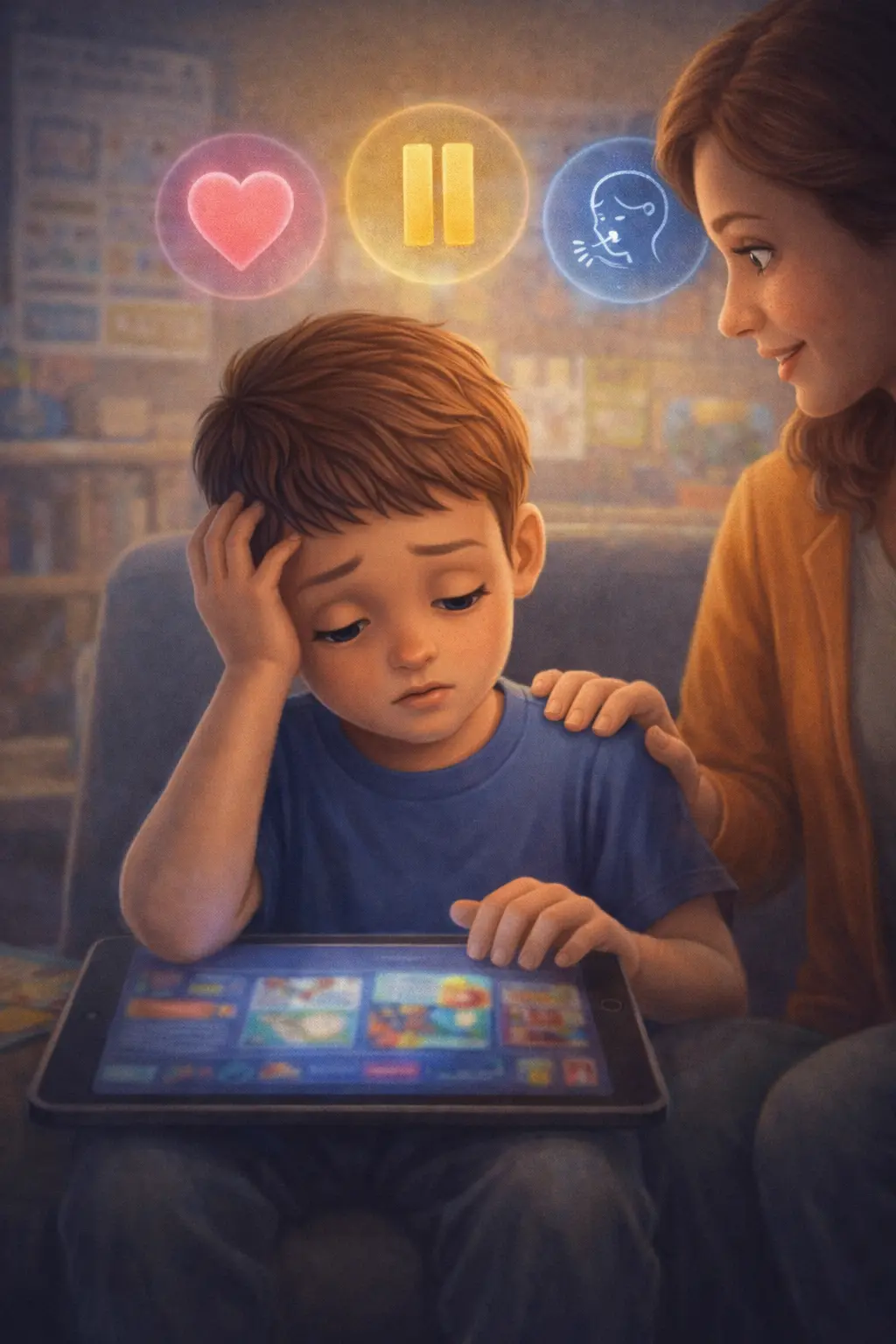
Children today are growing up in a digital world filled with devices, online videos, games, and constant streams of information. Helping children manage big feelings in a digital world is becoming an important part of healthy development.
While technology can offer opportunities for learning and connection, it can also introduce emotional challenges that younger children may struggle to understand.
Children aged 5–10 are still learning how to recognise and manage their emotions. When online experiences trigger excitement, frustration, comparison, or anxiety, children may find it difficult to process those feelings.
Helping children understand their emotions is an important part of both safeguarding and healthy development.
Why Big Feelings Can Happen in a Digital World
Online environments are often designed to capture attention.
Fast-moving videos, bright visuals, notifications, and social interactions can create strong emotional reactions.
Children may experience feelings such as:
- excitement from games or videos
- frustration when losing or being excluded
- sadness when comparing themselves to others
- confusion when seeing content they do not understand
Because children are still developing emotional awareness, these feelings can sometimes become overwhelming.
Helping Children Name Their Feelings
One of the most powerful ways adults can support children is by helping them identify what they are feeling.
Instead of saying “calm down,” adults can help children describe emotions with simple language.
For example:
- “It looks like that made you feel frustrated.”
- “Did that video make you feel worried?”
- “Are you feeling left out?”
When children learn the words for emotions, they begin to understand that feelings are normal and manageable.
Teaching Children That Feelings Come and Go
Young children sometimes believe that strong emotions will last forever.
Parents and teachers can help children understand that feelings change over time.
Helpful reminders might include:
- feelings are temporary
- everyone experiences different emotions
- talking about feelings helps them become easier to manage
This helps children build emotional resilience.
Encouraging Healthy Breaks from Screens
Taking breaks from digital activities is important for emotional balance.
Encourage children to spend time doing activities such as:
- outdoor play
- creative hobbies
- reading
- talking with family and friends
These activities help children reset emotionally and reconnect with the real world.
Creating Safe Conversations at Home and School
Children are far more likely to share concerns if they feel safe speaking to adults.
Adults can encourage this by:
- listening without judgement
- staying calm when children share worries
- thanking children for speaking up
When children feel supported, they develop confidence in asking for help when something online or offline makes them uncomfortable.
Using Storybooks to Help Children Understand Emotions
Stories can be a powerful tool for helping children explore emotions safely.
Characters in stories often experience the same feelings children encounter in real life, which helps children recognise and understand their own reactions.
The Guy & Cesar storybook series introduces important emotional and safeguarding themes through engaging stories designed for younger readers.
You can explore the books here
Professionals and parents can also access structured safeguarding resources here
You can explore our Toolkits here
Practical Tips for Parents and Schools
To support children’s emotional wellbeing:
- keep conversations about feelings regular and open
- encourage balanced screen time
- help children recognise and name emotions
- create calm spaces for children to talk
Small daily conversations about feelings can help children build lifelong emotional skills.
Final Thoughts
Growing up in a digital world brings both opportunities and challenges.
By helping children understand their emotions, encouraging open communication, and supporting healthy technology habits, parents and educators can help children develop confidence, resilience, and emotional awareness.
These skills allow children to navigate both the digital world and real-life experiences with greater confidence.