Explaining cancer to a child can feel overwhelming. Many adults worry about saying the wrong thing or causing fear. However, children aged 5–10 benefit from simple, honest explanations delivered calmly and clearly.
This guide will help parents, carers, and teachers explain cancer in a way that supports understanding, emotional safety, and open communication.
What Children Aged 5–10 Need to Understand
Children in this age group:
• Think concretely
• Notice emotional changes in adults
• May blame themselves for illness
• Need reassurance and consistency
The goal is not to provide medical detail. The goal is clarity and safety.
Use Simple, Clear Language
Avoid complex medical terms unless the child asks.
You might say:
“Cancer is a sickness where some cells in the body are not working the way they should.”
“It is not caused by anything you did.”
“It is not something you can catch like a cold.”
Simple language prevents confusion.
Address Common Fears Early
Children often worry about:
• Death
• Separation
• Changes in routine
• Who will look after them
You can say:
“The doctors are helping.”
“We will keep you updated.”
“You are safe.”
“You can always ask questions.”
Never promise outcomes you cannot control, but offer emotional reassurance.
Encourage Questions
Children process information slowly.
They may ask:
“Will they lose their hair?”
“Are they going to die?”
“Can I catch it?”
Answer honestly, in age-appropriate ways.
If you do not know, say:
“That’s a good question. Let’s find out together.”
This models calm problem-solving.
Watch for Emotional Signals
Some children react immediately.
Others show changes later.
Look for:
• Withdrawal
• Sleep disruption
• Increased clinginess
• Behavioural changes
These are normal emotional responses to uncertainty.
Use Stories to Support Understanding
Stories help children process difficult topics safely.
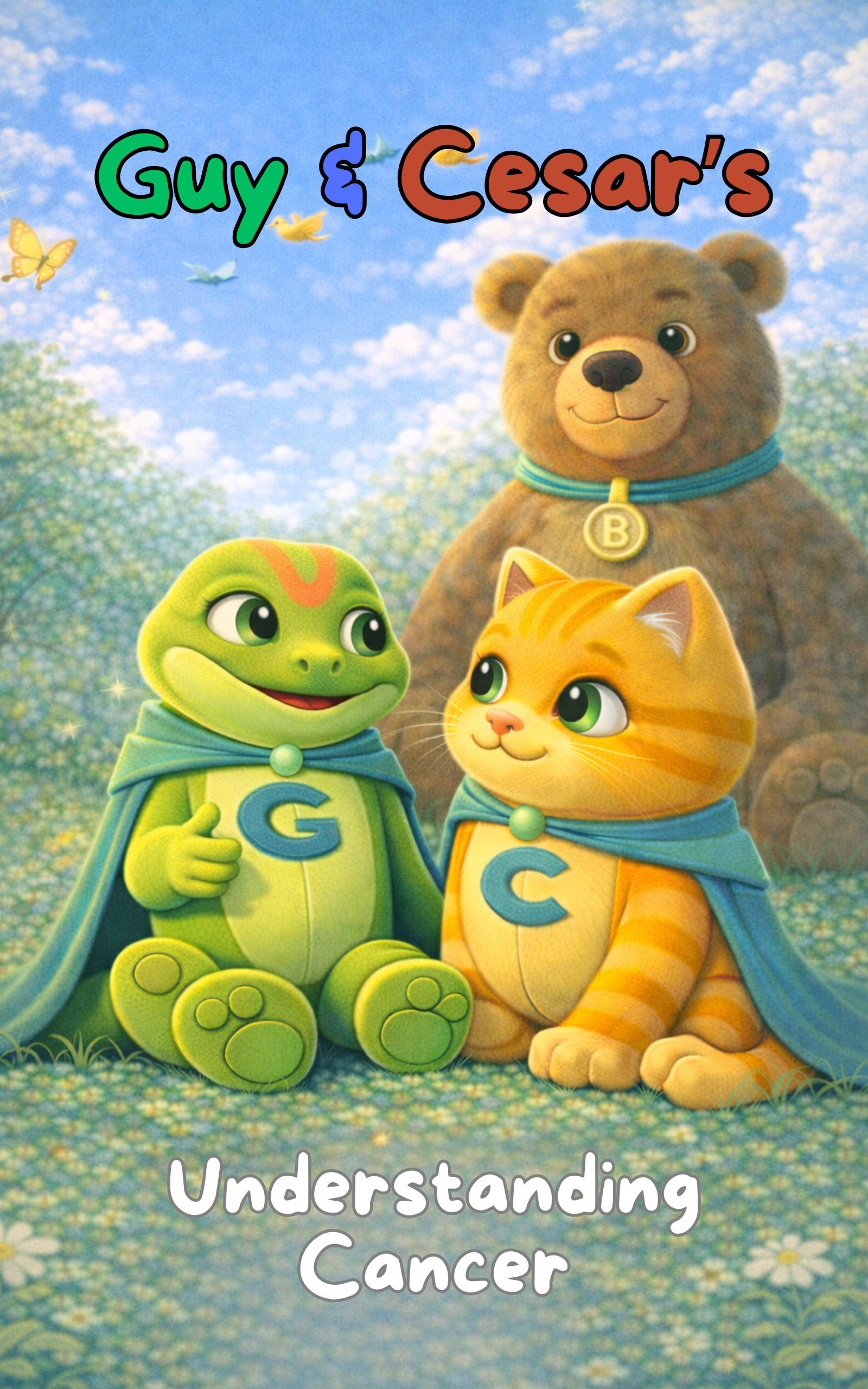
Guy & Cesar’s Understanding Cancer introduces the concept of illness in gentle, child-friendly language, focusing on feelings, reassurance, and trusted adults rather than medical detail. If you want structured adult guidance to support conversations and observe emotional responses, the Understanding Cancer Adult Toolkit Pack provides step-by-step support.
Story-based learning reduces anxiety and supports open conversation.
Reinforce What Children Can Control
When facing uncertainty, children benefit from structure.
Reinforce:
• Daily routines
• School attendance (when appropriate)
• Regular meal and sleep times
• Open communication
Consistency builds emotional safety.
When to Seek Additional Support
If a child shows:
• Ongoing fear
• Persistent behavioural changes
• Extreme anxiety
• Refusal to attend school
It may help to speak with:
• School staff
• A GP
• A child counsellor
Support is a strength, not a failure.
Final Thoughts
Explaining cancer to a child is not about having perfect answers. It is about being honest, calm, and present.
Children feel safest when adults speak clearly, allow questions, and maintain structure.
With the right language and emotional reassurance, difficult conversations can become opportunities for trust and connection.